Evaluating Pet Food Manufacturers
Key Quality Certifications to Look For
Seventy percent of South African pet owners admit they never verify the origins of their dog’s food. That statistic should give any discerning buyer pause. When evaluating pet food manufacturers, third party certifications are the clearest indicator of integrity. Look for HACCP compliance, which signals rigorous hazard analysis during production. The South African Bureau of Standards (SABS) mark also carries real weight in this market.
A few credentials matter more than others:
- ISO 22000 certification, addressing complete food safety management systems
- Good Manufacturing Practice (GMP), confirming consistent production control
- SABS 1853 compliance, the local standard for animal feeds
Reliable dog food suppliers will volunteer this documentation without hesitation. If a manufacturer deflects questions about certification, treat that as a warning sign. You are buying nutrition for a family member, so verify the paperwork before you trust the label.
Ingredient Sourcing Transparency
Over half of South African pet food labels use vague terms like “meat by products” without naming the animal. That opacity unsettles any careful buyer. The most reliable dog food suppliers volunteer procurement details before you ask, tracing every batch to the abattoir and the farm gate.
Transparent sourcing documentation should include:
- Named farms and processing facilities
- Batch level traceability codes
- Independent lab results for environmental contaminants
Question the rendering practices. Ask whether fish meal originates from certified sustainable fisheries. A manufacturer that hesitates on these answers is guarding something. Clarity costs nothing for companies with nothing to hide.
Production Facility Standards
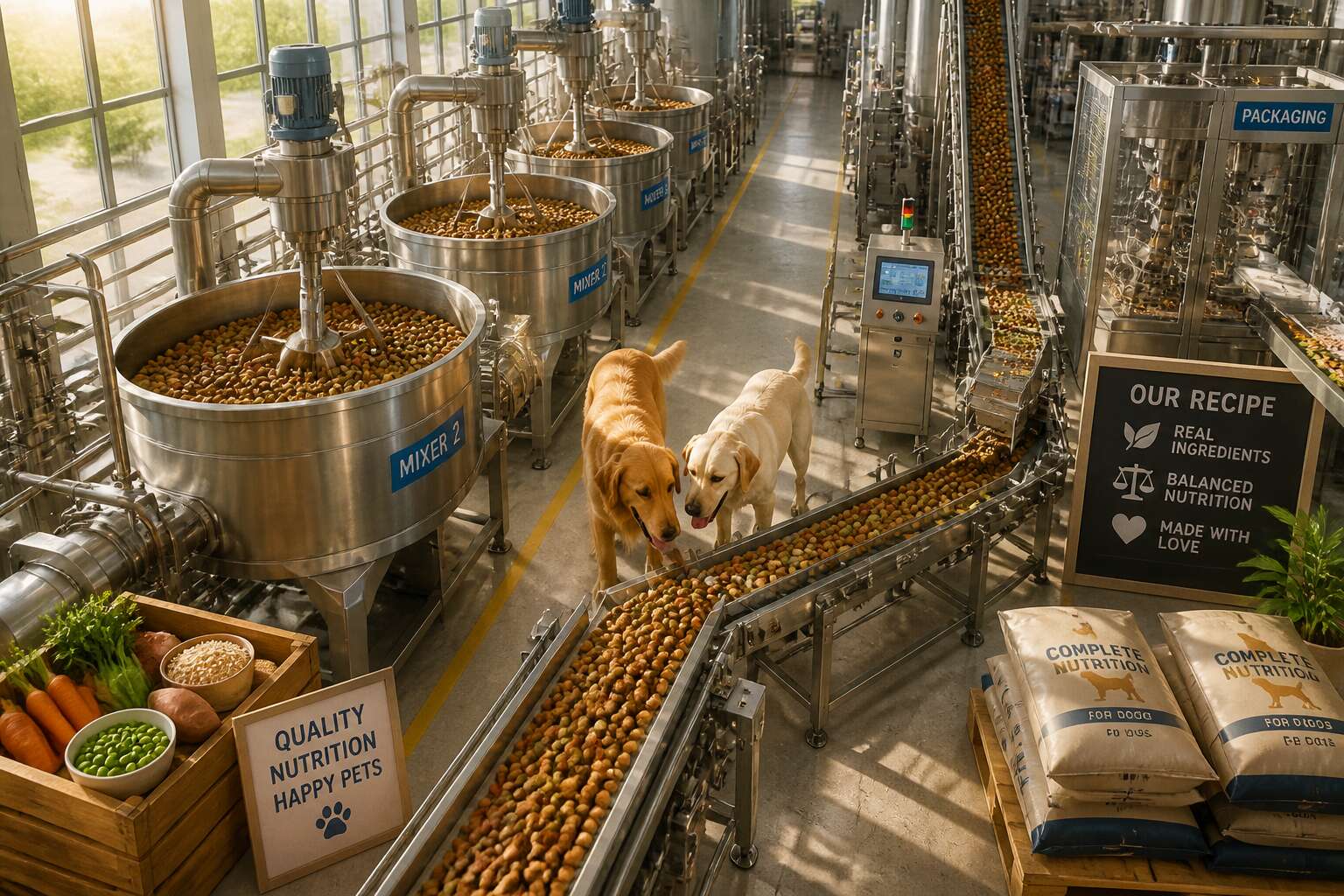
A production floor reveals a company’s character faster than any brochure. When I toured a Gauteng facility last year, the air handling system impressed me more than the gleaming extruders. Airborne pathogens respect no hierarchy. The best dog food suppliers in South Africa design workflows that prevent cross contamination, separating raw ingredient intake from cooked product zones completely.
Ask about their pest management schedules. Ask about staff hygiene protocols between shifts. A facility that welcomes unannounced visits has mastered these details. Look for documented cleaning validations and filter replacement logs.
- Check for separate entrances for raw materials and finished goods
- Inquire about positive air pressure in packaging areas
- Review water treatment and sanitation chemical logs
These specifics reveal operational discipline that no audit certificate can guarantee! Smaller dog food suppliers can outshine multinationals here, because ownership answers directly for every corner of the facility.
Recall History and Safety Records
When a manufacturer recalls a batch, their response tells you more than the recall itself. Do they issue a terse statement or walk buyers through the problem step by step? Dog food suppliers with clean recall histories often share their corrective actions publicly. Those with something to hide tend to bury it under legal jargon.
I always check public notices from the Pet Food Industry Association of Southern Africa. Look for:
- Recall frequency for the same issue
- Speed of public notification
- Whether corrective actions address root causes
A pattern of repeated recalls signals a systemic flaw. One-off incidents happen. Repeats are a choice.
I ask suppliers how they track complaints from veterinarians. A robust pharmacovigilance system catches problems before regulators step in. That vigilance separates dependable dog food suppliers from the rest. A supplier who monitors post market signals treats safety as a daily practice, not a crisis response.
Custom Formulation Capabilities
The difference between a supplier and a partner shows up in the formulation lab. Custom formulation is where dog food suppliers either demonstrate real expertise or expose their limits. A manufacturer who simply fills bags with a recipe you hand over is a contract packer, not a collaborator. That distinction matters when your brand rests on unique nutritional profiles.
I evaluate custom formulation capability by asking direct questions. Ask outright: do they employ in-house nutritionists? Can they run palatability trials? Will they adjust micronutrient levels without compromising texture? Their answers separate adaptable dog food suppliers from those stuck in rigid production lines.
- Request a mock formulation with your target protein and fat ranges
- Ask about minimum batch sizes for custom runs
- Check whether they share stability data for your proposed recipe
Response speed and technical depth reveal more than any brochure. A supplier who questions your assumptions is paying attention. One who agrees with everything has no stake in your outcome, plain and simple!
Types of Wholesale Pet Food Sources
Private Label Co-packers
In the landscape of wholesale pet food, private label co-packers occupy a specific role. They produce formulas for retailers who wish to sell under their own banner. This path allows a store to offer quality nutrition without owning a factory. For many South African entrepreneurs, these partnerships unlock the American Dream of brand ownership.
- Some co-packers focus exclusively on extruded kibble.
- Others specialise in canned or pouched wet food.
- A growing number handle freeze dried raw formulas.
Among dog food suppliers, this type demands careful scrutiny. You must know who grinds the meat and how they manage inventory. The relationship is intimate and personal. A good co-packer becomes your trusted ally.
Direct Manufacturer Partnerships
Most pet food in South Africa moves through a chain of distributors, each taking a margin and adding a layer of distance. Direct manufacturer partnerships collapse that distance entirely. When you forge one, you deal with the brand owner, the people who own the recipes and the quality standards. For a retailer, this relationship can secure exclusive territorial rights. It also gives you access to product development roadmaps before competitors see them.
The most reliable dog food suppliers operate their own facilities and control the entire chain from raw ingredient intake to final packaging. Direct manufacturer partnerships among dog food suppliers require volume commitments, but they deliver consistency that wholesale distributors cannot match. They share production schedules openly. They invite buyers to audit their lines unannounced.
Consider what you gain:
A dedicated account manager who understands your market
Priority allocation during raw material shortages
Custom packaging runs tailored to local regulations
Regional Distributors
Regional distributors operate where the national supply chains end. They know the routes, the customers, and the payment habits of their specific territory. In South Africa, that covers formal retail strips in Gauteng and stockists along the N2. For smaller dog food suppliers, these distributors offer shelf access that direct manufacturer partnerships cannot justify on volume alone.
The arrangement works best when the distributor holds territory knowledge. They consolidate orders, manage credit risk, and stagger deliveries around load shedding and road conditions.
A reputable regional distributor provides:
- Delivery schedules aligned to local trading hours
- Feedback on competitor pricing and stock movement
- Assistance with municipal trading requirements
The complication is that some distributors draw territory maps generously. Retailers have found their stock sitting in a warehouse three provinces away while the sales rep promises weekly visits. A direct line to the distributor’s operations manager keeps those promises honest, and your dog food suppliers appreciate knowing where their products actually land.
Online B2B Marketplaces
Online B2B marketplaces are rewriting the map for dog food suppliers. A buyer in Cape Town can compare bulk pricing from three continents before morning coffee. These platforms aggregate wholesalers, importers, and niche producers under one digital roof, with transparent stock levels and verified certifications.
Yet not every listing is vetted. Payment terms vary wildly, and freight costs can negate a tempting unit price. When evaluating a marketplace, confirm it offers:
- Escrow services or buyer protection
- Support for South African payment methods
- Delivery routes that include your province
These platforms serve as a discovery layer. They reveal new dog food suppliers, but always verify quality credentials independently.
Specialty Organic Producers
Specialty organic producers represent a distinct breed of dog food suppliers in South Africa, one that turns soil health into canine vitality. The local organic pet food market has grown by nearly 18% since 2022, driven by owners who trace every pellet to its farm origin. These producers often operate small batches, using certified organic meat and vegetables from regional co-operatives. Their supply chains are shorter, which means fresher ingredients and fewer intermediaries, but also higher unit costs.
What sets them apart is their approach to sourcing. They prioritise regenerative agriculture, rotational grazing, and non-GMO crops. When you evaluate these suppliers, consider:
- Whether they hold a valid organic certification from a recognised body like Ecocert or the South African Organic Sector Organisation
- How they verify the origin of each ingredient batch
- Their seasonal production capacity, since organic yields fluctuate naturally
These dog food suppliers often offer limited product ranges, yet they deliver traceability that large manufacturers cannot match. For a boutique brand or a veterinary practice with discerning clients, this source type provides a compelling alternative to commodity-driven wholesalers.
Bulk Raw Material Suppliers
Bulk raw material suppliers handle the heavy end of the pet food supply chain. They move ingredients by the tonne, not the bag. In South Africa, these operators work with abattoirs, grain silos, and oilseed processors to supply basic building blocks for kibble production. These are the dog food suppliers that rarely interact with retail buyers.
Typical offerings include:
- Rendered protein meals like chicken and beef
- Cereal grains such as maize and sorghum
- Crude fats and oils
If you run a mid sized manufacturing line, these dog food suppliers offer cost advantages that boutique sources cannot match. Their volumes lower unit prices, but they require substantial storage and logistics. A single delivery might fill a truck or two, so space becomes a serious consideration.
Cost Considerations When Choosing a Supply Partner
Minimum Order Quantities
Cost structures among dog food suppliers vary widely, yet minimum order quantities often dictate the real expense. According to a 2024 South African pet trade report, 58% of suppliers apply tiered pricing that rewards volume, but the savings disappear if you pay for months of warehousing. The math seems simple, but hidden fees like cold chain logistics or pallet handling can erode profit margins. Here are the costs that catch buyers unprepared:
- Transportation surcharges for rural deliveries
- Import duties on certain protein sources
- Insurance for temperature-sensitive shipments
Each cost line interacts with the MOQ. A lower minimum might cost more per bag, yet it reduces your capital lockup. For small pet stores, that flexibility outweighs the per-unit premium. The prudent approach involves calculating your actual sales velocity. When you align order sizes with consumption patterns, dog food suppliers become genuine partners rather than mere vendors.
Pricing Tiers and Volume Discounts
In the South African pet food market, the allure of a lower per-bag price often masks a more complex financial reality. Pricing tiers and volume discounts are the siren song of procurement, promising substantial savings for those willing to commit to larger orders. Yet, the true cost of a partnership with dog food suppliers is rarely captured by the unit price alone. It is a delicate dance of cash flow, storage capacity, and anticipating the unpredictable appetites of your customer base.
The tiered structures themselves are a study in strategic psychology. A 5% discount for doubling your order might seem modest, but the cumulative effect over a quarter is significant. However, the corollary is that you are now paying for substantial warehouse space and tying up capital that could otherwise be used for marketing or expanding your product range. The real question is whether your sales velocity justifies the bulk. I have seen businesses crippled by pallets of premium kibble that moved slower than expected during a quiet season.
To truly navigate this landscape, you must look beyond the headline percentage and interrogate the behavioural economics at play. Consider how the more sophisticated operators handle the volume variable:
1. They analyse the supplier’s tariff breaks to find the “sweet spot” where the discount outweighs the holding cost.
2. They negotiate for delayed payment terms on larger orders to protect their own cash position.
3. They seek clauses that allow for mixed pallets, combining different protein sources to reach a volume threshold without overstocking a single line.
Ultimately, the cost-effectiveness of a supply partner is measured not in rands saved per order, but in the financial agility they permit. The most prudent path often involves a computed balance, where you purchase enough to secure a favourable rate, but not so much that your capital is trapped in a storeroom. This alignment of purchasing power with real-world demand is what separates a profitable retail operation from a costly storage facility. The true value of a supplier then emerges, not from their price list, but from their flexibility in helping you navigate these financial straits.
Shipping and Logistics Expenses
Shipping and logistics expenses often constitute the silent margin killer for South African retailers. The sheer geography of our country means that a pallet of kibble travelling from a Gauteng manufacturer to a coastal town in the Western Cape carries a freight cost that can wipe out the benefits of a negotiated discount. For many dog food suppliers, the price quoted per bag is ex-factory, and the responsibility of getting that stock to your door falls squarely on your shoulders. This creates a nuanced decision where the most affordable supplier on paper may become the most expensive once the transport quote is added to the invoice.
The nature of the product itself complicates the route to market. Dog food is dense, heavy, and voluminous, which means freight is charged by the kilogram, not by the unit. You quickly learn that the efficacy of a supply partner is determined by their ability to work within your logistical constraints. Consider the elements that differentiate a helpful partner from a mere seller.
– Whether they arrange their own dedicated fleet with fixed delivery windows.
– If they offer cross-docking facilities near major urban hubs to reduce final-mile costs.
– Their willingness to advise on seasonal stock levels to avoid boning up capital during the slow winter months.
Consequently, the wisdom of your choice hinges on how the supplier’s shipping model aligns with your own infrastructure. A partnership with a distant but cheaper manufacturer might be less prudent than a loacal distributor who offers a lower price per tonne and a shorter lead time. In this land of long tar roads, the true cost of the product is only finalised when the truck backs into your loading bay.
Contract Terms and Hidden Fees
The true cost of a supply partnership often reveals itself in the quiet clauses of the contract, not the quoted unit price. Many dog food suppliers in South Africa present a seemingly competitive rate, only to attach ancillary charges that surface after the first delivery. Payment terms, for instance, might reward early settlement, but the opposite can hold true for late payments, where interest accrues at a punishing rate.
Equally important is the sequence of price adjustments. A contract that locks in a rate for twelve months offers clarity, yet it may include an annual escalation clause tied to the exchange rate or commodity prices. Before signing, examine the notice period for price changes and the conditions that trigger them. A partner who reserves the right to alter terms without consultation is not a partner at all, but a fair-weather vendor.
– Minimum order penalties that apply when a monthu2019s volume falls short.
– Restocking fees on returns, even for product that arrives damaged.
– Charges for split deliveries or partial pallets.
The most prudent path is to request a full schedule of potential fees in writing before the first order. A supplier who hesitates to provide this transparency is likely hiding something within the fine print. The negotiations should extend beyond the per-bag price to include the total cost of doing business, from credit terms to the administrative burden of invoicing. For dog food suppliers, the margin is found in the details of the agreement, and the buyer who scrutinises these details secures the true value.
Ensuring Nutritional Compliance and Labeling Accuracy
AAFCO Guidelines
When a label promises complete nutrition, that claim carries legal weight. AAFCO guidelines provide the framework dog food suppliers use to substantiate such statements, ensuring every product meets defined nutritional standards. The adequacy statement, which specifies the life stage a formula serves, is the cornerstone of this system.
Reliable suppliers verify their recipes through feeding trials or nutrient profiles. They also submit labels for review before products reach the market. A compliant label typically includes:
- The guaranteed analysis with minimum and maximum values
- The ingredient list in descending order by weight
- The nutritional adequacy statement from AAFCO
- The feeding directions based on the product’s caloric density
For South African buyers, working with dog food suppliers who follow AAFCO protocols offers a measurable baseline for quality, even when local regulations differ. Labeling accuracy reflects a supplier’s commitment to transparency, making it a reliable indicator of their overall manufacturing discipline.
Regulatory Labeling Requirements
South Africa’s regulatory terrain for pet food shifts constantly, and the obligation rests squarely on dog food suppliers to decode every requirement before a single bag reaches the shelf! The Consumer Protection Act and the Agricultural Product Standards Act govern what appears on packaging, while South African Bureau of Standards guidance adds another layer of voluntary rigor.
Accurate labeling extends beyond listing components. Consider these elements that often trip up even seasoned producers:
- Net mass declarations that reflect true fill weights
- Batch codes linked to traceable production logs
- Responsible party contact details displayed clearly
Labels that overlook these points weaken buyer trust and attract regulatory attention. For dog food suppliers navigating this market, precision in labeling constitutes a commercial safeguard, not a bureaucratic chore.
Third-Party Testing
A label is a promise, but a promise unverified is merely a ghost haunting the supply chain. For dog food suppliers, the true measure of integrity lies in the shadows of the laboratory, where samples are broken down and scrutinized under harsh light. Third-party testing functions as an external conscience, a dispassionate auditor that verifies the nutritional claims etched onto every bag. Without this layer of vigilance, a formula could drift from its stated profile, and the consequences would be silent and slow to manifest.
We rely on independent laboratories to confirm protein levels, fat content, and the delicate balance of micronutrients. This verification extends to the absence of contaminants, those unwelcome specters like aflatoxins or heavy metals that might linger in raw materials. A certification from a recognized facility carries more weight than any internal assurance. It is a tangible artifact of due diligence.
Key parameters we insist on scrutinizing:
– Proximate analysis for guaranteed minimums and maximums
– Amino acid profiles, particularly taurine and lysine
– Heavy metal screening for lead, arsenic, and mercury
– Microbiological stability, including salmonella and E. coli
For dog food suppliers in South Africa, this practice is not a luxury. It is a necessary ritual to separate those who merely claim quality from those who prove it. The audit trail from an independent lab provides a bulwark against liability and a foundation for enduring market reputation. We trust the process, but we verify the result, because the health of a nation’s dogs depends on that precise, cold, and unforgiving data.
Traceability Protocols
Dogs cannot read labels. The humans who feed them depend on dog food suppliers to make those labels truthful. Nutritional compliance is the discipline of aligning a printed promise with a biological outcome. When a bag states 28% protein, the question is whether that number holds true from the supplier’s dock to the dog’s bowl.
Traceability protocols must be granular. They track batches, ingredient lots, and processing conditions. They link each bag to a specific production run.
Here is what we demand from suppliers!
- Barcode-level batch tracking for raw ingredients
- Documentation of nutritional adjustments during processing
- Verification that label claims match final product analysis
Building Long-Term Relationships With Reliable Providers
Communication and Responsiveness
A supplier who answers on the second ring earns your trust before the first shipment. I have watched partnerships thrive when responsiveness becomes a standard practice.
Building long term relationships with reliable dog food suppliers requires more than signing contracts. Communication is essential to the entire operation. When a shipment runs late or an ingredient changes, the best providers call you before you call them. They listen and adjust quickly!
Consider what separates a good provider from a great one:
- Proactive updates on stock and pricing shifts
- Clear channels for urgent queries
- Willingness to accommodate seasonal demands
Dog food suppliers who embody these traits become indispensable partners. Their transparency reduces your risk and sharpens your own service.
Backup Supply Strategies
Even the most reliable dog food suppliers face disruptions. A factory fire, a port strike, or a drought on the protein farms can halt production without warning. My own operation learned this when a trusted partner missed a quarterly delivery by three weeks.
Backup supply strategies begin with dual sourcing. Every critical ingredient should have a secondary provider already vetted and sampled. Do not wait for the emergency to test their quality. The time to verify is now, when you can compare calmly.
Consider these safeguards:
– Maintain a 30 day buffer stock of core formulas
– Rotate your backup supplier with one small order per quarter
– Keep contracts that allow volume shifting between providers
When backup plans become routine, the fear of shortages disappears. Long term relationships with dog food suppliers depend on this preparation. A second provider is not a rejection of your primary partner; it is how stability endures. Test your contingency before you need it!
Contract Negotiation
Contract negotiation determines the character of a partnership. When I sit across from a potential provider, I watch how they handle hard questions about timelines and quality failures. A supplier who deflects blame today will do the same when your shipment arrives late tomorrow. Long term relationships with dog food suppliers depend on shared expectations, not paperwork alone. Negotiate for delivery windows, quality checkpoints, and dispute resolution procedures. This clarity forms the foundation that survives market shifts.
I prefer contracts that reward consistency over time. A tiered commitment structure gives both sides room to grow. The best dog food suppliers treat the contract as a living document, revisiting terms when circumstances change. This flexibility transforms a vendor into a partner.
Drafting a fair agreement requires patience. The effort pays off in every quiet, dependable delivery.
Performance Audits
Seventy percent of supplier relationships that falter do so within the first two years, often not due to product quality but due to eroding communication. Performance audits are the quiet pulse check that keeps the partnership alive. When I visit a facility unannounced, I observe the rhythm of production, the state of the loading docks, and the energy of the staff. A provider who maintains cleanliness during a surprise visit, without the polish of a scheduled tour, demonstrates a culture of consistency that aligns with my own standards.
These audits go beyond checking boxes on a clipboard. I use them to measure the calibration of expectations set during contract talks. If we agreed on a 48 hour lead time, I track the actual dispatch data over several months. This data becomes the language of our quarterly reviews. We discuss variances as shared problems, not as accusations. This approach turns a potential conflict into a problem solving session.
During one such audit, I noted a recurring pattern of delayed pallet labeling. It was a minor issue, but it threatened downstream tracking. We addressed it on the spot with a procedural tweak. Without the audit, that small friction could have compounded into a major traceability failure.
– Inventory rotation accuracy
– Temperature logs during transit
– Staff training records and turnover rates
The best dog food suppliers welcome this scrutiny because it protects their interests too. A robust auditing schedule catches small issues before they become public recall events. It also reveals the true character of the operation. I have walked through facilities where the manager knew the name of every line worker, a sign of low turnover and high morale. That morale translates directly to careful handling of your product. Regular, transparent performance audits, conducted with respect, forge a bond that outlasts any price fluctuation. The data doesn’t lie, and neither does the effort you see on the floor. Over time, these audits become a shared ritual that solidifies trust, moving the relationship from transactional to truly collaborative. I find that the suppliers who excel here are often the same ones who lead in ingredient sourcing transparency and communication responsiveness, creating a full circle of reliability. That is the true measure of a partner.
Sustainability Practices
Long term relationships with dog food suppliers require attention beyond the first delivery. In South Africa, providers face port delays, energy constraints, and fluctuating grain prices. A supplier who installs solar backup and sources maize locally is building stability into your own operation. Their investments show before they speak about them.
When a supplier records water usage per batch and shares the data, they reveal their priorities. Reliable dog food suppliers offer these numbers without being asked. They also publish waste diversion rates and support farmer training programs.
- Water recycling rates in the production cycle
- Sustainable packaging procurement
- Carbon reporting across logistics routes
These markers outlast any single contract. They indicate a provider who will remain accountable when the market tightens.


0 Comments