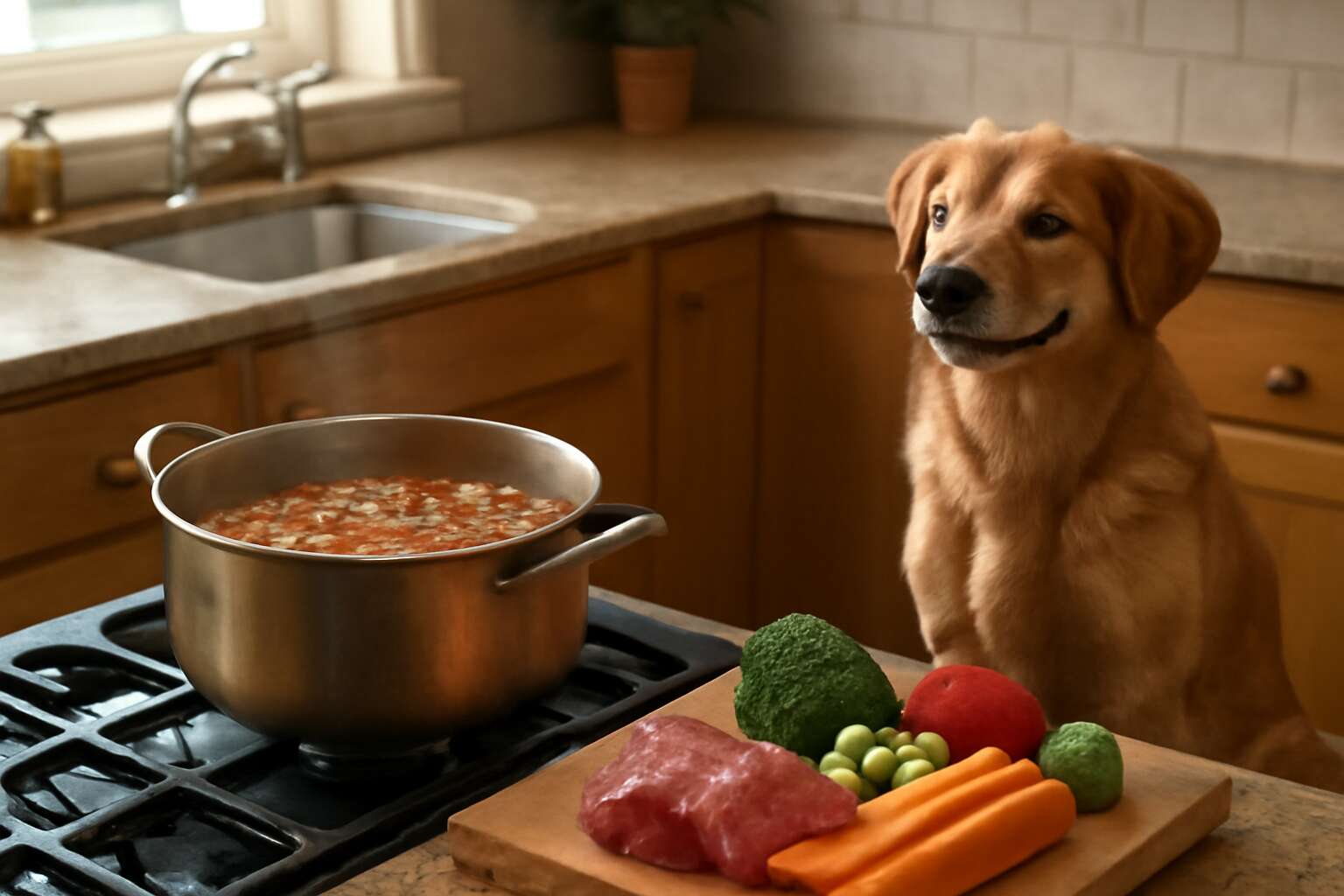
Understanding Canine Nutrition for Home-Cooked Meals
Key Nutrients Every Dog Needs
Across South Africa, a growing 37% of dog owners are turning to home-prepared meals, chasing healthier tails and shinier coats. Understanding canine nutrition is essential when formulating meals. For those seeking how to cook dog food at home, balance matters as much as flavor.
Key nutrients every dog needs ensure energy, growth, and vitality:
- Protein: high-quality sources support muscle maintenance and metabolism.
- Healthy fats: essential fatty acids for energy and a glossy coat.
- Carbohydrates and fiber: aid digestion and steady energy release.
- Calcium and phosphorus: support bone health and mineral balance.
In essence, canine nutrition is a meticulous dance of macro- and micronutrients, with local ingredients in South Africa offering a surprising array of options for a balanced profile. I watch tails wag when nutrition aligns with instinct.
Protein Sources for Home Cooking
Across South Africa, kitchens hum with the slow art of nourishment. For those curious how to cook dog food at home, understanding protein quality, digestibility, and energy balance is our compass. When canine meals align with instinct, the glow of a healthy coat and steady vigor follows—less random improvisation, more informed composition.
Protein sources for home cooking must be varied and sourced with care. Consider these options commonly available in South Africa:
- Beef and lamb (lean cuts)
- Chicken and turkey (lean options)
- Fish such as pilchards or hake
- Eggs
- Organ meats in moderation
Local ingredients lend both freshness and flexibility, anchoring our meals in regional abundance while honoring a dog’s unique taste and temperament.
Carbohydrates and Fiber in Canine Diets
Canine nutrition is a voyage, and energy balance is the compass. A South African survey reveals that dogs fed with balanced, highly digestible energy show steadier activity and shinier coats across breeds. Understanding how to cook dog food at home opens a world of textures and aromas that align with instinct.
Carbohydrates and fiber are not mere fillers; they shape stamina and gut health. Carbs provide ready energy, while fiber modulates transit and nourishes gut microbes. Ideal sources combine digestibility with gentle bulk, keeping meals harmonious rather than heavy. Common options available locally include:
- Oats
- Sweet potato
- Brown rice
- Pumpkin (cooked, plain)
Let the palate and the gut guide the journey. Each dog writes its own diet story, shaped by activity, age, and temperament, with carbs and fiber weaving a steady thread through the day.
Fats, Omega-3s, and Healthy Oils
In the kitchen where tails wag, fats are the quiet compass guiding energy and coat luster. “Balance is the secret ingredient,” the old South African proverb among canine nutritionists often whispers, and it lands with certainty on every plate.
Fats and Omega-3s nurture skin, fur, and joints, while smoothing the rhythm of digestion. Choose sources that deliver essential fatty acids without heaviness, so meals remain harmonious rather than cluttered with oils.
- Fish oils from salmon or sardine
- Flaxseed oil
- Olive oil
- Coconut oil
For those exploring how to cook dog food at home, fats and healthy oils are a subtle, powerful ally—supporting glossy coats, steady energy, and a balanced gut without tipping into excess.
Micronutrients and Supplements
Nutrition is the quiet governor of a dog’s energy and vitality, a truth that lands hard in South African kitchens. “Balance is the real performance enhancer,” a seasoned canine nutritionist once said, and that balance shows up on every plate. Understanding Canine Nutrition for Home-Cooked Meals frames this idea as everyday practice rather than abstract theory!
For those exploring how to cook dog food at home, micronutrients and supplements fill essential gaps beyond protein and fats. Vitamins and minerals support immune function, bone strength, and skin health, while thoughtful supplementation protects against deficiencies without tipping into excess.
- Vitamins: A, D, E, B-complex
- Minerals: calcium, phosphorus, zinc, selenium
- Trace elements: iodine, iron
In South Africa, vet guidance and dog-specific supplements ensure safety, especially when higher-demand nutrients are involved. The goal is a balanced intake that supports a glossy coat, steady energy, and a robust immune response, aligning with responsible home cooking practices.
Safety and Hygiene When Cooking for Dogs
Safe Ingredient Practices
As one editor likes to quip, a clean kitchen is a healthy dog. In home-cooked bowls, safety is not a garnish but the headline, because a misstep can linger in a bowl longer than a lingering compliment. Thinking through how to cook dog food at home demands respect for vitality.
Safe Ingredient Practices hinge on provenance: meat from trusted sources, freshness signals on packaging, and avoidance of known hazards (onions, grapes, chocolate, xylitol). The idea of cross-contamination dissolves when the kitchen respects raw and prepared boundaries and containers stay clearly labeled.
In South Africa, climate and busy households make hygiene a practical virtue. A tidy pantry, careful labeling, and thoughtful portions keep canine meals lively and safe, a witty reminder that good manners extend to the dog bowl.
Avoiding Toxic Foods for Dogs
Safety is the first seasoning, a mantle the kitchen wears when translating care into canine vitality. For those wondering how to cook dog food at home, provenance is the quiet hero: meat from trusted sources, freshness signals on packaging, and the steadfast avoidance of known hazards (onions, grapes, chocolate, xylitol) keep bowls bright and wagging.
In the SA home, hygiene blooms where boundaries are respected—raw versus prepared separated, containers clearly labeled, and parts rotated with mindful portions. The table becomes a sanctuary where a dog’s bowl remains free from cross-contamination and fearsome surprises. A modest list of safeguards helps, and a tidy pantry is a hallmark of care.
- Provenance and freshness signals on packaging
- Clear labeling to separate raw, cooked, and leftovers
- Avoidance of onions, grapes, chocolate, and xylitol
- Dedicated containers and surfaces to prevent cross-contamination
- Thoughtful portioning to maintain balance and safety
Cross-Contamination and Kitchen Hygiene
“Safety is the flavor that never spoils,” a chef once whispered, and it rings true in every SA kitchen. When you contemplate how to cook dog food at home, let hygiene be the steady drumbeat—clear boundaries, calm hands, and surfaces kept pristine.
Cross-contamination is a thief; treat raw and prepared as separate acts. Here are safeguards that flow like verse:
- Dedicated containers and surfaces to prevent cross-contamination
- Clear labeling to separate raw, cooked, and leftovers
- Thoughtful portioning to maintain balance and safety
With mindful rotations and a tidy pantry, a dog’s bowl becomes a bright beacon of care, not chaos.
Food Handling, Storage, and Shelf Life
Consider this: in many SA kitchens, a third of households admit using the same cutting board for dog meals and human food. Safety is the flavor that anchors every bowl, and hygiene is its steady drumbeat when a pet’s plate hinges on careful practice.
Handling and storage demand a ceremony of order—clear boundaries, calm hands, pristine surfaces. If you’re exploring how to cook dog food at home, imagine your pantry as a harbor where raw, prepared, and leftovers drift apart, each in its own safe space.
- Clear labeling and dating of meals to map shelf life
- Separate storage zones for dog meals and human foods
- Mindful rotation to honor freshness without waste
Shelf life whispers in the cool of the fridge: the longer you wait, the more the flavor of risk lingers; trust time, but respect it.
Step-by-Step Meal Planning and Recipes
Assessing Your Dog’s Life Stage and Health Needs
In the quiet rhythm of a South African kitchen, how to cook dog food at home becomes a poem of care. “Nutrition is the backbone of a wag,” a seasoned handler once whispered, and that truth guides every thoughtful decision around meals for loyal companions.
- Life stage and energy needs from pup to senior
- Health considerations, allergies, and veterinary input
- Palatability and variety to sustain interest
Step-by-step meal planning unfolds as a mindful arc: assess life stage and health needs, sketch a flexible menu, and honor seasonal ingredients. When you frame a recipe around physiology rather than fads, you craft meals that support energy, digestion, and resilience.
Recipes become living poetry for the kitchen—nourishing, practical, and distinctly South African in spirit.
Portion Control and Calorie Calculation
In South African kitchens, around 60% of dog owners report steadier energy when meals are planned with care. A seasoned handler once whispered, “Food is mood in a bowl.” When you master how to cook dog food at home, begin with a simple plan that grows with your dog.
Step-by-step meal planning and portion control keep energy steady and digestion smooth. Use this practical outline:
- Calculate daily calories your dog needs, and set a sensible portion target with guidance from your vet.
- Draft a weekly menu that balances protein, vegetables, and healthy fats, with clear, weighable portions.
- Weigh each meal and log intake, adjusting as your dog’s weight and activity shift.
Small, thoughtful bowls carry huge heart—an everyday ritual that nourishes body and spirit alike.
Sample Weekly Menus
In SA kitchens, around 60% of dog owners report steadier energy when meals are planned with care. A seasoned handler once whispered, “Food is mood in a bowl.” Start with a simple plan that grows with your dog.
Step-by-step meal planning keeps energy steady and digestion smooth. This is how to cook dog food at home in a balanced, vet-informed plan: calculate daily calories, draft a weekly menu, and weigh portions to log intake.
- Monday: lean protein with veggie mash
- Tuesday: poultry, pumpkin, leafy greens
- Wednesday: fish or eggs, sweet potato, peas
- Thursday: beef mince, carrot, oats
- Friday: lamb, spinach, quinoa
Small, thoughtful bowls carry huge heart—an everyday ritual that nourishes body and spirit alike.
Batch Cooking and Freezing Tips
Across South Africa, early adopters of home-cooked meals report happier dogs and calmer energy levels when plans are in place. If you’re curious how-to-cook-dog-food-at-home, you can start with a simple, scalable roadmap that grows with your dog.
Step-by-step planning appears in many home kitchens as a calm, repeatable rhythm.
- Draft a balanced batch plan: protein, vegetables, and a digestible carb.
- Cook in bulk, cool, portion into meal-sized containers, and label with date.
- Freeze portions for quick meals during the week.
Freeze portions in airtight containers and label with dates. Thaw safely in the fridge, stir well, and serve at room temperature to protect texture. Batch cooking saves time and keeps meals interesting for paws and palates alike.
How to Introduce New Foods Safely
Across South Africa, nearly 40% of dog owners have turned to home meals to tailor energy and palatability. Step-by-step meal planning brings a calm, repeatable rhythm to busy kitchens, turning a chaotic week into a steady cadence.
If you’re curious how to cook dog food at home, start with a simple roadmap that grows with the dog. The idea of recipes and flexible adaptation keeps the process lively. Introducing new foods safely becomes a measured balance of texture, aroma, and dog personality, guided by consistency and observation.
- Consistency in portions and timing
- Slow introduction of new ingredients with careful observation
- Veterinary input when changing proteins or adding supplements
Tools, Substitutions, and Cost Considerations
Kitchen Tools for Easy Home Cooking
Tools turn kitchen chaos into canine cuisine. In South Africa’s compact kitchens, smart gear keeps prep quick and the rand in check. When exploring how to cook dog food at home, start with a sharp knife, a sturdy pot, and a clean cutting board. A thermometer, measuring cups, and a blender seal the setup.
- Sharp chef’s knife
- Sturdy pot with a wide base
- Digital thermometer
- Measuring cups and spoons
- Blender or food processor
- Clean cutting board
Substitutions keep meals flexible and wallet-friendly. For protein, swap chicken for turkey or beans; for grains, oats or brown rice work; for fats, a drizzle of olive oil can shine. These options suit SA markets and seasonal produce.
Cost considerations: seasonal produce, bulk buys, and proper storage extend shelf life and value. Mindful purchasing helps keep home cooking affordable in rand terms while maintaining nutrition.
Ingredient Substitutions and Alternatives
Tools anchor the craft of how to cook dog food at home, a space where nutrition and artistry meet. In South Africa’s compact kitchens, a sharp chef’s knife, a sturdy pot with a wide base, and a clean cutting board stand ready. A digital thermometer, measuring cups, and a blender seal the setup, turning rough ingredients into a harmonious blend.
Substitutions keep meals flexible and wallet-friendly. For protein, turkey or beans offer reliable alternatives; for grains, oats or brown rice work as humble bases; for fats, a drizzle of olive oil or a whisper of flaxseed oil adds shine. These options suit SA markets and seasonal produce.
- Protein: turkey, beans, or lentils for variety
- Grains: oats or brown rice as affordable bases
- Fats: olive oil or flaxseed oil for shine
Cost considerations: seasonal produce, bulk buys, and proper storage extend shelf life and value. Mindful purchasing helps keep home cooking affordable in rand terms while maintaining nutrition.
Budgeting for a Home-Cooked Diet
Tools anchor the craft of preparing canine nutrition in South Africa’s cozy kitchens. The journey toward how to cook dog food at home begins with the right implements: a sturdy blade, a wide pot, a clean board, a thermometer, measuring cups, and a reliable blender. Efficient tools turn rough ingredients into a harmonious blend, even in compact spaces!
Substitutions keep menus creative and wallets sane. Instead of fixed staples, embrace flexibility—swap proteins, bases, or fats as seasons and markets shift.
- Protein swaps
- Base substitutions
- Fat alternatives
Cost considerations are about timing and storage as much as ingredients. Plan around seasonality, buy in bulk when possible, and marshal proper storage to stretch rand value and nutrition across the week.
When to Consult a Vet or Nutritionist
Tools matter more than texture when tracing the arc from pantry to plate. In South Africa’s cozy kitchens, a sturdy blade, a wide pot, a clean board, a thermometer, measuring cups, and a reliable blender keep meals harmonious—how to cook dog food at home.
Substitutions keep menus creative and wallets sane. When markets shift, lean proteins, wholesome bases, and fats can drift with the seasons; adapt without losing balance, letting every meal tell its own quiet story.
Cost considerations bend with timing and storage as much as ingredients. Seasonality dictates rhythm, bulk purchases surface in the market’s cadence, and proper storage preserves rand value and nutrition through the week.
When to consult a vet or nutritionist becomes a compass rather than a cliff. Consider how to cook dog food at home alongside professional guidance if a dog’s energy, weight, or digestion shifts unexpectedly; professional insight ensures safety and balance.



0 Comments