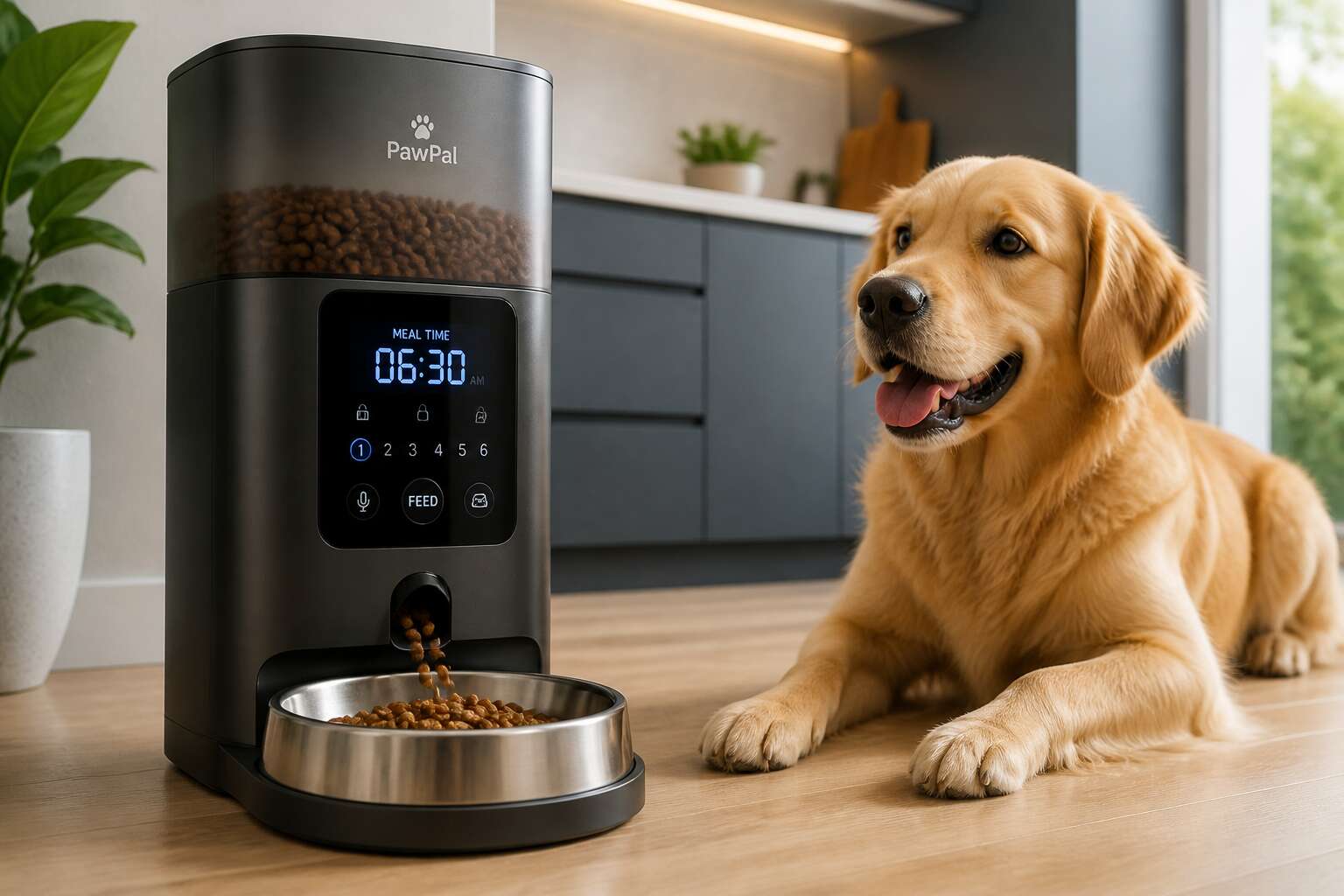
Why Schedule Your Pet’s Meals
How Timed Feeding Supports Digestive Health
A dog’s stomach secretes acid on a circadian schedule, not on demand. When feeding times vary wildly, gastric acid accumulates and irritates the empty lining, a precursor to bilious vomiting syndrome. I have watched my own terrier salivate at 5 PM sharp, his body telling time better than any wall clock.
Scheduled meals synchronise the entire digestive cascade. Enzymes appear when food arrives. The gastrocolic reflex triggers efficient transit. A dog food dispenser with timer protects this biological rhythm from the chaos of human schedules, releasing portions at the precise hour your pet’s gut anticipates nourishment.
Consider how a consistent feeding window affects your dog:
- Insulin response stabilises, lowering diabetes risk in susceptible breeds
- Gut motility becomes regular, reducing constipation and diarrhoea
- Cortisol levels diminish, because meal anxiety fades with predictability
The Link Between Portion Control and Weight Management
Nearly 60% of South African dogs carry excess weight, yet the cause is rarely overfeeding alone. It is erratic feeding. When meals arrive at random hours, owners tend to top up bowls or miss the signal that a portion is enough. A dog food dispenser with timer changes the equation. It releases a measured serving at the scheduled hour, removing guesswork from the bowl. Portion control becomes mechanical, precise, and repeatable.
Consider what consistent portions accomplish for weight management:
- Each meal becomes a fixed calorie event
- The body uses those calories for energy, not fat storage
- Over weeks, the ribcage and waist reflect the change
The link between scheduling and portion size is simple: predict the serving, then control the intake. For dogs prone to obesity, this predictability is the foundation of any weight loss plan.
Reducing Anxiety Around Waiting for Food
Veterinary behaviourists tie irregular feeding to food anxiety in dogs. A hungry dog with no idea when the next meal comes stays on edge. The stomach churns. Stress hormones rise. The dog paces. This is not misbehaviour, it is physiology.
A dog food dispenser with timer imposes order. The mechanism clicks at the same hour every day. The dog learns that sound. Waiting ends at a predictable moment. Anticipation becomes focused, not frantic.
Here is what regular timing does:
- It lowers stress hormones between meals
- It gives the dog a mental schedule to rely on
- It replaces restless pacing with calm expectation
The bowl fills on time. The dog rests. That is the point!
Core Features to Prioritize
Programmable Feeding Schedules and Repeat Cycles
Dogs eat an average of two to three meals per day, yet most feeding schedules are guesswork. A dog food dispenser with timer transforms that guesswork into a fixed rhythm. The real value sits in the scheduling engine. You want distinct meal windows for weekdays, weekends, and fasting days. That granularity lets you align feeding with your dog’s natural hunger peaks without hovering over the bowl.
Repeat cycles add another layer of control. Instead of resetting the device each morning, you program a daily loop that runs for weeks. Some models allow staggered portions across multiple small meals, which suits owners away for long stretches.
- Multiple meal slots per day, configurable down to the minute
- Repeat cycles that persist across weeks without manual reset
- Separate weekend and weekday schedules for varied routines
The best dog food dispenser with timer stores these settings even during power cuts, a real consideration for South African households. Choose one with a battery backup and a clear display, and the machine becomes a quiet member of the household.
Portion Sizes and Adjustable Serving Amounts
Consider this: a standard 250 ml measuring cup can hold anywhere from 90 to 140 grams of kibble, depending on the brand and how the pieces settle. That variance alone destabilises any feeding plan. I have watched feeding routines falter over inconsistent scooping. A dog food dispenser with timer removes the guesswork by dispensing defined serving amounts rather than volumetric scoops.
Portion control hinges on the adjustment mechanism. The best units allow precise gram increments, often as small as 5 grams, and store that dose in memory. For a 15 kg dog needing around 200 grams daily, a 20 gram error per meal compounds into measurable weight change within a season. The dog food dispenser with timer becomes essential when you change kibble brands, since recalibrating the serving size takes seconds rather than disrupting your whole feeding system.
Battery Life and Backup Power Options
The kitchen is silent at 6 A.M., and the bowl remains empty. Load shedding in South Africa does not discriminate, and neither should your dog’s feeding routine. A dog food dispenser with timer is only as reliable as its power source, which means the battery backup system deserves as much scrutiny as the dispensing mechanism itself.
When the grid fails, a smart feeder should transition seamlessly to reserve power without resetting the schedule. The best units offer extended battery life measured in weeks, not hours, and alert you when reserves run low through an app notification.
– A backup battery that supports a minimum of 30 days of operation
– Power outage alerts delivered directly to your phone
– A memory retention system that preserves your feeding schedule during full shutdowns
Your dog cannot tell you when the machines fail. The trust you place in automation demands a system that survives the chaos of an unstable grid. An automatic dog food dispenser that forgets its programming after a power surge is worse than useless. It becomes a monument to false promises. Choose carefully, because every dark evening brings another test.
Wi-Fi Connectivity and Smart Alerts
A dog food dispenser with timer only earns its keep when it communicates. Wi-Fi connectivity turns a silent machine into a source of information, sending a notification the instant your dog’s meal goes uneaten. You learn about problems immediately instead of discovering them after coming home.
In South Africa, where loadshedding upends schedules without warning, smart alerts function as an early warning system. A feeder that detects a skipped meal or an abnormal feeding pattern gives you the information to respond before minor concerns become serious health issues.
A reliable dispenser reports:
- Real time feeding confirmations with timestamps
- Low food level warnings before the hopper empties
- Remote dispensing when you are trapped at the office or stuck in traffic
The machine runs continuously. When your dog food dispenser with timer maintains its connection, the feeding routine stays on track regardless of your location.
Portion Control and Feeding Modes
Single Versus Multiple Meal Dispensing
Choosing between single and multiple meal dispensing is a decision about trust. A dog food dispenser with timer that releases one portion per cycle creates a singular moment of expectation. Multiple feedings, however, spread portions across the day. Each mode asks you to predict your dog’s needs at a different scale. The single mode suits owners who prefer to supervise each meal, while the multi mode supports those who are away for longer hours.
I have found that the more I observe my dog food dispenser with timer, the more I notice my own habits. Am I feeding to satisfy hunger, or to fill a gap in my routine? That distinction matters more than the mechanical settings. The timer simply executes; the mode reveals intent.
Slow Feeding Features for Fast Eaters
Fast eaters gulp their portions in seconds, then look up for more. A dog food dispenser with timer can counter that instinct with adjustable feeding modes. Some units offer a slow dispensing function that releases kibble in small bursts, forcing the dog to pace itself.
Slow feeding features vary by model. For example:
- A divided tray that requires nudging for each piece
- A rotating drum that drops a few bites at a time
- A spiral maze that turns eating into a puzzle
These modes change the meal from a rush to a deliberate activity. The timer still controls the schedule, but the feeding mode controls the speed.
Manual Override and On-Demand Snack Options
Many owners overlook the manual override button. A dog food dispenser with timer still requires human interaction for unexpected moments. This feature lets you dispense a serving outside the scheduled plan, offering flexibility.
On-demand snack options provide more flexibility. They allow you to reward good behavior without breaking the portion control system. The key is knowing the difference between a snack and a meal.
- A single treat release for training moments
- A half portion for late afternoon hunger
- A slow trickle for interactive play
Using these modes keeps the daily intake consistent. Manual override does not abandon portion control. It simply shifts control back to you.
Customizing Portions for Different Dog Sizes
Feeding modes determine whether a dispenser simply drops kibble or manages intake properly. A Great Dane requires roughly six times the daily intake of a Jack Russell terrier. A dog food dispenser with timer can handle both extremes when the serving settings are granular enough. You assign one portion for the morning and a smaller portion for the evening, and the machine holds those values across weeks of consistent use.
Some units store distinct meal programs for two dogs in the same household. Others rely on a rotating dial that controls gram weight per serving. The feeding modes commonly split into:
- A micro portion for toy breeds under 5 kg
- A standard portion for medium breeds from 10 to 25 kg
- A large portion for breeds above 30 kg
The goal is matching the mode to your dog’s condition, not the breed chart. A lean, active small breed may need more than a sedentary large breed. A good dog food dispenser with timer shifts between these modes without a full reprogramming, which keeps portion control honest for different body types.
Installation, Security, and Maintenance
Setting Up the Dispenser for Stable Daily Use
One tilted bowl can turn a calm morning into a hunt for scattered kibble. A dog food dispenser with timer earns its place when it stands firm. In South Africa, where humidity and seasonal rain test electronics, placement decides durability. Set the unit on a level floor, away from direct sunlight. Engage the anti-slip feet and, for rambunctious breeds, fix the mounting brackets into the wall.
Security covers more than locked lids. A strong latch keeps clever paws out of the hopper between scheduled meals. It also prevents tampering when you are away at work.
Maintenance is a weekly ritual. Wipe down the dispensing chute after each fill to stop crumbs from clogging the auger, and inspect the silicone seal for wear. A clean, stable dispenser runs quietly and keeps your dog’s routine uninterrupted.
Preventing Food Jams and Hopper Issues
A jammed auger means a missed meal. A dog food dispenser with timer depends on kibble flowing smoothly from hopper to bowl. In South Africa’s coastal regions, humidity swells kibble until it sticks to the auger flights.
Installation prevents many problems. A level base keeps kibble weight distributed evenly. A tilted unit presses food against one side, causing bridging across the hopper opening. Vibration from a loose unit settles fine particles into a dense plug at the bottom.
The security lid blocks paws and moisture. Its rubber gasket seals out humid air. Check that gasket monthly for cracks. Maintenance stops residue buildup:
- Wipe the dispensing chute after every refill
- Brush the auger chamber weekly with a dry cloth
- Inspect kibble for clumps before loading
A clean hopper means your dog food dispenser with timer delivers every scheduled portion. A neglected one jams.
Cleaning and Refilling Best Practices
Your dog food dispenser with timer endures a hard life in South African homes. Salt laden coastal air attacks the seals, while Highveld dust finds every crevice. I have seen units fail simply because their bases sat on uneven tiles. A level platform is non negotiable. A tilted dispenser forces kibble into one corner, and the auger grinds against uneven pressure. Secure the base firmly, but leave a little space so vibration does not move the unit across the floor.
The lid is only half the story. The gasket is your first defence against humidity and curious animals. I inspect the rubber seal monthly, and I replace it at the first sign of brittleness. A lockable latch keeps smart dogs from serving themselves at midnight.
- Wipe the chute after every refill
- Brush the auger chamber weekly with a dry cloth
- Inspect kibble for clumps before loading
Neglect these steps and the mechanism will jam. Follow them and your dog food dispenser with timer feeds faithfully, every scheduled portion, through every heavy summer storm.
Choosing the Right Model for Your Lifestyle
Matching Capacity to Your Dog’s Daily Intake
Observing your dog’s daily intake requires honesty. We overestimate how much our companions actually consume, and a hopper that dwarfs their needs leads to stale food and waste. When selecting a dog food dispenser with timer, measure the real volume of food your dog eats in a day, then assess your own schedule carefully!
Some owners leave town for a weekend. Others work twelve hour shifts. For the latter, a modest reservoir suffices. For the former, larger capacity matters. Consider these factors:
- Your dog’s breed and activity level
- Your travel frequency
- The dispenser’s footprint in your kitchen
A dog food dispenser with timer should match your life in practical terms.
Desktop Units Versus Floor-Standing Designs
The choice between a desktop unit and a floor-standing design often comes down to your counter space and your dog’s reach. A desktop dog food dispenser with timer suits small kitchens or apartments, keeping the hopper within sight. Floor-standing models, however, offer larger reservoirs and stability for big breeds. Several factors matter here:
- The height of your dog when eating
- How much floor space you can spare
- Whether the dispenser needs to move between rooms
My own kitchen suffered from clutter until I switched to a slim floor model. That shift changed my morning routine entirely. Whatever you pick, ensure the dispenser sits on a level surface to prevent jams.
Budget Considerations and Long-Term Value
Choosing a dog food dispenser with timer begins with an honest look at your routine. The commuter who feeds at dawn needs a model that survives years of daily use. The household with multiple dogs needs something sturdier still. Budget considerations follow from those realities. The market separates into three tiers:
- Entry level units with basic timers
- Mid range dispensers with portion control
- Premium models with smart connectivity
Each tier carries a different cost per meal over time. A cheap unit that jams or breaks loses its value quickly. A dependable mid range dispenser, though pricier upfront, often proves cheaper across its lifespan. Long-term value also includes warranty coverage and the availability of spare parts. Replacement parts for a dog food dispenser with timer often ship from abroad, adding cost and delay. My own choice came down to total cost of ownership, not the sticker price. That mindset has served both my wallet and my dog’s schedule well.



0 Comments