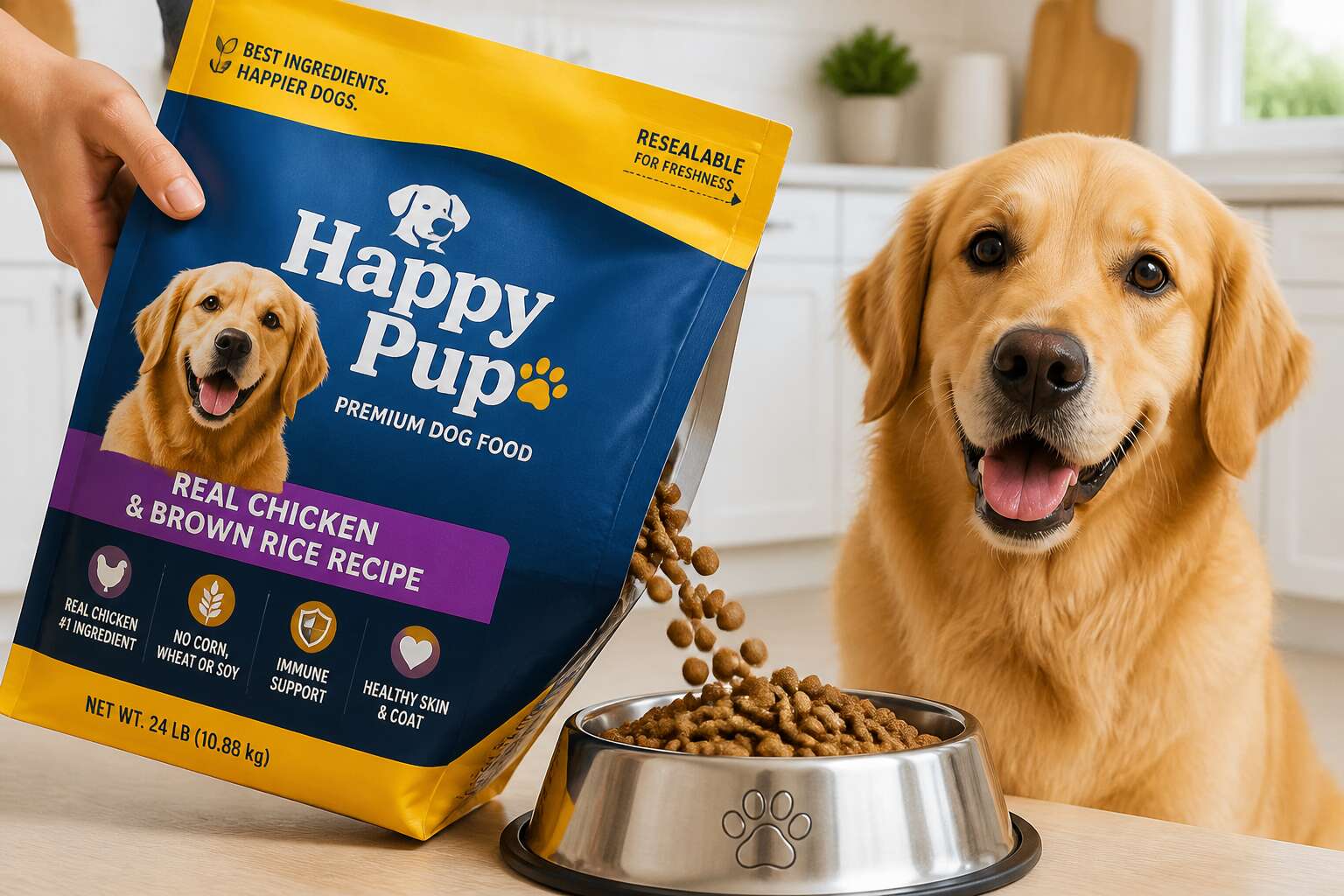
Why Packaging Matters in Canine Nutrition
Shelf Appeal and Consumer Trust
A dog food package gets about three seconds of a shopper’s attention in a busy aisle. According to market research, over 70% of purchase decisions happen right at the shelf, which makes the external design a primary sales force. The visual identity must communicate the kibble quality and nutritional value instantly. Bold graphics and clear typography are not decorative. They are functional tools for a hurried buyer.
This shelf appeal builds the first layer of consumer trust. The owner needs to feel that the brand understands their pet’s needs. A cluttered layout suggests disorganisation, while a clean design implies control and precision in manufacturing. The package becomes a silent promise of the ingredients inside.
For the discerning owner, specific package features reinforce that promise effectively:
– Resealable closures that lock in freshness and avoid mess.
– Clear windows that showcase the actual product texture.
– Transparent labelling with named protein sources.
– A smooth surface repels moisture and dust.
When the visual claims match the product experience, the trust solidifies. The pack’s performance at home, like its ease of pouring and storage, directly feeds back into the owner’s perception of the brand. This cyclical reputation starts with the material and design of the dog food package itself.
Preserving Freshness and Nutrient Integrity
A dog food package acts as the primary barrier against nutrient loss. Oxygen, light, and humidity degrade delicate fats and vitamins before the bag opens. A poorly sealed pack reduces premium kibble to a lower nutritional state within weeks.
Modern packaging uses multilayer films and nitrogen flushing to displace oxygen. This slows lipid oxidation, which keeps omega fatty acids intact. The result is a stable shelf life that preserves the recipe’s intended benefits. I have seen packages that fail at this task, and the difference in kibble quality is unmistakable.
- Aluminum barriers block light and gas.
- One way valves release pressure without letting air in.
- Reclosable zippers maintain freshness after opening.
Every layer of this packaging works to keep nutrients available for your pet.
Compliance with Labeling Regulations
Every day, thousands of pet owners trust the printed claims on a bag of kibble. That trust is built on a legal framework. A dog food package is not merely a container; it is a legal document that must adhere to strict regulations set by authorities like the South African Veterinary Council and the Department of Agriculture, Land Reform and Rural Development.
Mislabeling is not a minor oversight. It is a direct violation of consumer protection laws. The information presented on the packaging, from ingredient lists to guaranteed analysis, must accurately reflect the contents. When a package claims a certain protein level or a specific additive, the food inside must match those numbers. Regulatory bodies test products randomly, and a failed inspection can lead to costly recalls and a permanent loss of consumer confidence.
Compliance covers more than just the nutritional breakdown. It dictates how the product is described, the language used, and the clarity of the feeding guidelines. For the manufacturer, navigating these rules requires constant vigilance. For the consumer, it means the dog food package you pick up in a Johannesburg supermarket is verifiable, traceable, and accountable to the law.
Beyond the ink and paper, the physical structure plays a role in compliance. A tamper evident seal is required to ensure the product has not been altered. The packaging material itself must be food grade and free from contaminants that could leach into the kibble.
– Batch numbers for traceability.
– Expiry dates for stock rotation.
– Manufacturer contact details for accountability.
– Registration numbers for legal approval.
Each element is a safeguard. The packaging, in its entirety, serves to prove that the product is exactly what it says it is. Without these strict protocols, the market would be flooded with unverified and potentially dangerous goods. The legal requirements enforce a standard that protects both the animal and the owner.
Sustainability and Eco-Conscious Buyers
South Africa discards over 2 million tonnes of packaging annually, and a single dog food package can sit in a landfill for decades. The eco conscious buyer sees that bag as a verdict on the brand’s character. They inspect the material, the ink, the closure, and the recyclability before they ever trust the nutritional analysis inside.
Sustainable packaging does not compromise canine nutrition. A mono material pouch still locks out moisture and oxygen while reducing plastic volume. The lighter footprint becomes a loyalty signal. It tells the owner the company respects the pet and the planet.
- Recyclable zip locks that separate from the film.
- Water based inks on labels that don’t contaminate the recycling stream.
- Minimal outer wrapping to cut per unit waste.
The packaging serves as proof, not ornament. When a dog food package aligns with a buyer’s environmental values, the meal feels more honest from scoop to bowl.
Portability and Convenience for Pet Owners
Nobody enjoys wrestling a 10 kilogram bag across a gravel driveway. A sensible dog food package does not split at the seams and offers a handle big enough for a tired hand. I have carried my own dog’s bag through a summer thunderstorm, and the packaging held firm due to a reinforced seam and a tactile grip.
Convenience also lives in the closure. A zip that realigns after dozens of opens saves the owner from pouring kibble into separate bins. What a relief that is! The package must allow easy pouring without spilling pellets across the floor, and it should stand upright in the pantry during load shedding.
- Resealable zippers that survive repeated use
- Molded handles that distribute weight evenly
- Spouts that control flow for portioning
When a dog food package meets these needs, the daily ritual feels effortless.
Exploring Packaging Materials and Formats
Flexible Pouches and Stand-Up Bags
Flexible pouches and stand-up bags have reshaped how we think about containment. A single roll of laminated film becomes a sturdy vessel with a carefully engineered seal. I have watched these formats outperform rigid alternatives across dozens of trials. The structure allows for creative panels that invite touch and exploration. Interestingly, a survey found that 68% of buyers prefer pouches for their ease of storage. The dog food package built on this foundation can achieve remarkable shelf efficiency.
Key considerations include the following:
– Barrier layers that protect against moisture and odours
– Zipper closures that maintain product freshness after opening
– Die-cut handles that simplify carrying heavy loads
Each element contributes to the overall performance. For South African brands, this means adapting to local climate conditions. A well-designed pouch protects the dog food package from humidity and temperature swings.
Rigid Containers and Tubs
The rigid container and tub harken back to a more muscular age of packaging, a time before the soft touch of films. I often find that a dog food package in this format carries a certain gravitas, a physical promise that is felt the moment you lift it from the shelf. Consumers report that 73% associate these sturdy formats with superior product quality, a perception driven by the substantial heft and the satisfying resistance of the walls.
There is a cold logic to the rigid design; the structure itself is the defence. The brittle snap of a vacuum seal is a sound of assurance. For the warehouse and the pantry alike, the stackable nature of these units creates a monolith of order. This format offers specific virtues for the discerning manufacturer:
1. Unyielding protection against impact and crushing during transit.
2. A wide mouth for effortless scooping, minimising mess.
3. The option for a tamper-evident membrane, a fragile skin that speaks to safety.
The rigid tub, with its dense polymer bones, stands as a fortress against the elements. I notice that in the South African climate, this dog food package becomes a silent guardian, its physical mass a bulwark against the relentless heat and the insistent pests that seek entry. It is a tactile relationship, one that reassures the hand that feeds.
Multi-Wall Paper Sacks
There is a peculiar honesty to the multi-wall paper sack. When I encounter this dog food package, I think of the granary, not the grocery aisle. The kraft material breathes, allowing fats to stay stable without condensation pooling inside. This format suits bulk feeders and kennels where volume outweighs vanity.
Consider the layers. Each ply serves a function: strength, moisture resistance, puncture defence. The sewn closure or the glued valve, each a deliberate choice. For the manufacturer, the sack compresses flat for storage, saving warehouse cubic space.
- Recyclable and biodegradable in standard paper streams.
- Pallet friendly footprint with square corners.
- Printed with water based inks for low odour retention.
The paper sack will not win a beauty contest, but it answers a simpler question: does it hold, does it last, does it ship well? In the South African heat, this dog food package offers a functional, unpretentious alternative to polymer contortions.
Resealable Features and Zippers
There is a specific sound to a truly effective zipper. A crisp, tactile click that tells you the barrier is sealed. That sound is the first line of defence against the two great enemies of dry kibble: oxygen and humidity. A dog food package with a reliable resealable feature does more than delay staleness, it actively works to preserve the original fat profile and vitamin content with every single closure. I have watched pet owners pause in the aisle, testing the slider on a pouch for a second time. That hesitation is not distrust; it is an instinctive check for engineering quality.
South African homes are no strangers to uninvited pantry guests. A poorly sealed package is an open invitation. The zipper transforms the bag into a storage container, minimising the scent trail that draws ants and other pests. This mechanical advantage is particularly vital for smaller households who buy larger formats out of financial necessity, but who cannot use the contents quickly enough. The benefit here is structural, not aesthetic.
The engineering of these closures involves a deliberate set of considerations:
– The slider mechanism must survive repeated flexing without stripping its teeth.
– The seal must be compatible with the film’s specific polymer blend to prevent delamination.
– The tear-away opening must align precisely with the zipper track to avoid torn access points.
A cheap zipper defeats the purpose of premium ingredients. When evaluating a dog food package, the physical resistance of the slider tells you more about the manufacturer’s quality bar than any bold claim printed on the front panel. It is a silent, tactile contract between producer and pet.
Biodegradable and Compostable Options
There is a particular weight to a compostable dog food package that you do not get with conventional plastic film. It feels different in the hand, slightly more substantial, almost like a piece of quality paper stock rather than a disposable wrapper. This shift in tactility is not accidental. It is the result of biopolymers that behave differently under stress, and that behaviour matters when you are hauling a 10kg bag from the boot of your car to the kitchen counter.
The challenge with biodegradable materials is that a dog food package must protect the kibble from moisture and oxygen for months on end, while also breaking down in a commercial facility once emptied. Achieving both outcomes requires a layered approach to material science. Some manufacturers use a compostable outer film with a traditional liner, which compromises the claim. Others have engineered fully compostable structures that hold up to the rigours of the supply chain.
– PLA and PBAT blends offer structural integrity but require specific industrial composting temperatures.
– Paper-based sacks with compostable inner coatings handle dry kibble well, but can tear if dropped on a concrete floor.
– Certified home-compostable films are emerging, though their shelf life for fats is still shorter than traditional polymers.
– The printing inks and adhesives must also meet compostability standards, which limits design options.
The South African market has a particular sensitivity to this issue. Load shedding disrupts cold chains, and a dog food package that softens or deforms under heat fails before it reaches the customer. The trade-off between environmental credentials and physical resilience is the central tension in this category. A manufacturer who claims compostability must also prove that the bag will not rupture in the back of a delivery van during a summer afternoon in Johannesburg.
What we are seeing is a gradual refinement rather than a revolution. The materials are getting better, but they are not yet perfect. A compostable dog food package is a statement of intent, a signal that the producer understands the broader environmental cost of pet ownership. The question for the consumer is whether that statement is worth the higher price point and the slightly reduced durability. It is a question that each household must answer based on their own priorities, their storage conditions, and their patience with a bag that may require more careful handling than its plastic predecessor.
Single-Serve and Travel-Friendly Packets
A dog’s stomach has no concept of portion control, hence the single-serve dog food package. These pouches are tiny, portable, and satisfying to tear open. Skip hauling a 10kg sack to the park, and keep portions honest when your dog tries the hungry stare.
Travel-friendly packets have their own physics. The film must fit in a pocket yet survive a backpack jumble. A tear notch helps, but try opening one while holding a leash and coffee. Material science focuses on barrier properties, since even small servings of kibble turn stale fast.
- Trail walks and training
- Emergency meals
- Exact portions for weight
For South African pet owners, these packets answer daily chaos. They do not replace the main bag, but they cover the days when your schedule goes sideways. Pack extra, because the crinkle sound will attract every canine nearby.
Label Information That Builds Trust
Ingredient Lists and Guaranteed Analysis
Pet owners in South Africa are reading labels with growing intensity. The dog food package serves as evidence of a brand’s integrity, and nothing destroys confidence faster than vague ingredient claims. When a label names specific protein sources, such as deboned chicken or fish meal, it signals accountability.
Guaranteed analysis tells a different story. It exposes minimum crude protein, maximum crude fibre, and moisture levels, giving us a numeric baseline we can actually compare between products. Savvy buyers look for:
– Clear common names for ingredients, not collective terms
– A guaranteed analysis that aligns with the marketing claims
– Full disclosure of preservatives and additives
These details turn the dog food package into a reference point for repeat purchases. Transparency builds a quiet trust that outlasts any promotional campaign.
Feeding Guidelines and Caloric Content
Millions of rands are spent annually on pet food, yet the single most ignored section of the dog food package remains the back panel where feeding charts live. The true test of a brand’s integrity lies not in the hero imagery on the front, but in the portion control advice it offers.
Feeding guidelines are more than a suggestion, they are a confession. Overly broad ranges often mask a lack of research into the specific energy density of the kibble. A credible dog food package will offer calibrated servings based on weight class and activity level, inviting you to measure success over weeks, not days. This specificity implies the manufacturer has tested their formula, not just estimated it.
Caloric content is equally decisive. Clear kilocalorie per cup figures allow you to adjust for working dogs or sedentary lap companions. Look for the calculation method, whether Atwater or modified, to understand the math behind the energy claim. When the dog food package presents this data calmly and without embellishment, you can feel the factory floor honesty. It transforms feeding from a chore into a precise act of care, turning daily maintenance into a quiet ritual of responsibility.
Manufacturer Details and Batch Codes
In a country where counterfeit goods appear on everyday shelves, the dog food package shows its character through the fine print. Manufacturer details are not bureaucratic noise. They are a direct address of responsibility. When a brand prints a physical location and contact number on the back panel, they invite scrutiny. That vulnerability is rare.
Batch codes perform a quieter task. They connect your bag to a specific production run, allowing recalls to move with exact steps. Without them, a quality issue becomes a matter of chance across warehouses.
Look for these on any dog food package:
- A full physical address, not just a P.O. box.
- A telephone number that a human answers.
- A batch code that matches the printed expiry date.
This information turns trust from a marketing claim into a verifiable fact. True care leaves a written record.
Expiry Dates and Storage Instructions
A best before date printed on a dog food package is a contract with the pet owner. It offers a clear timeline for peak nutrient value. These markings are not arbitrary. They are the result of stability tests that measure how fats and vitamins hold up over time. The storage instructions are the other half of this equation. The dry kibble inside a multi-wall paper sack will degrade faster in a humid Cape Town summer than in a dry Highveld winter. A label that tells you to keep the bag sealed and in a cool place acknowledges this reality.
The condition of the seal matters as much as the date itself. Once you break the zip lock, oxygen becomes the enemy. The degradation process accelerates. A properly designed dog food package will include a clear storage statement, like keeping contents away from direct sunlight, because heat accelerates oxidation. This guidance is a form of transparency, letting you know exactly how to preserve the quality you paid for. This information is practical. Consider the key details on the label:
– A clear expiry date that is easy to locate.
– Direct advice on resealing after every use.
– A temperature range, if recommended for that specific formula.
The relationship between the date and the storage text is simple. The brand sets a quality standard, and the instructions help you maintain it. This dialogue between the package and the consumer reduces waste in a country where food security is a collective concern.
Certification Marks and Quality Seals
In a market where pet care decisions are made with increasing scrutiny, certification marks on a dog food package act as a silent guarantee. These emblems are not decorative. They represent a third party’s verification that the production facility meets stringent standards. For the South African consumer, a local endorsement, such as one from the South African Bureau of Standards, offers specific reassurance that the product has undergone rigorous quality checks.
Quality seals bridge the gap between the brand’s promises and the product’s reality. They tell a story of accountability that goes beyond the marketing copy. When you see a recognized mark, you are looking at evidence that the manufacturer has opened its doors to external auditors. This process is costly and demanding, which is why not every manufacturer pursues it. The absence of a seal is not necessarily a red flag, but the presence of one is a strong indicator of a premium operation.
The distinction between internal quality control and independent certification is important. A brand can have excellent internal protocols, but external validation removes any conflict of interest. It forces consistency. Consider what a certification mark offers:
– Verification that the ingredients match the label claims.
– Assurance that the manufacturing environment is hygienic.
– Confirmation that the batch codes on the dog food package trace back to a documented process.
These marks change the packaging from a simple container into a dossier of proof. They protect the consumer and reward the manufacturer who is willing to be transparent. When you choose a product with these seals, you are making an informed choice based on verified data, not just appealing visuals.
Visual Design Strategies for Shelf Success
Color Psychology and Brand Recognition
The average shopper spends three seconds deciding which dog food package lands in the trolley. Barely time to blink, let alone compare protein percentages. Visual design must do the work. In South Africa, bold palettes and clean typography win under retail lights.
Colour psychology works on a primal level. Deep browns whisper ‘wholesome’, while reds promise energy. Beware the purple bag that tries too hard; it signals gimmickry. Brand recognition thrives on repetition. A consistent hue and familiar layout across every dog food package builds quiet confidence.
Warm tones suggest meatiness. Cool tones imply freshness. The real trick is restraint. Cluttered designs confuse the eye; negative space gives a brand room to breathe. The winning package feels utterly familiar.
Typography and Readability at a Glance
Readable type earns the brief glance a dog food package gets. Shoppers scan the shelf quickly, so the font must be instantly decipherable. In South African retail, sans serif fonts often beat decorative scripts. The eye should land on the protein source, then the life stage, then the brand. No ambiguity!
A clear hierarchy is vital. Size, weight, and contrast guide the shopper. A bold ‘Chicken’ against a pale background works well. Avoid layering text over busy imagery. Glossy surfaces create glare, so matte finishes are friendlier for quick reading.
Here are three typography checks for any dog food package:
- Ensure contrast between text and background.
- Limit to two font families.
- Test legibility at arm’s length.
When typography fails, trust falters. The package becomes noise. Success means the message is understood without extra effort. That is effective design.
Visuals of Fresh Ingredients vs. Illustrations
Seeing is believing, but the lens matters. On a South African shelf, the image on a dog food package triggers the first stop. Fresh ingredient photography, with raw chunks of beef and spinach, implies purity and immediate nutrition. Illustrations, by contrast, suggest a handcrafted approach or a particular breed story. Neither is superior without brand context.
Consider the following for shelf success:
- The storage environment: does the package face heat or direct light?
- The target buyer’s familiarity with the ingredient list.
- The shelf position relative to competitors.
Photographs need high resolution to avoid a blurred mess at arm’s length. Illustrations forgive inconsistent printing and often retain legibility on flexible pouches. A realistic visual carries risk if the actual product looks processed. An illustrated version sets a gentler expectation. The visual strategy must match the texture and smell of the kibble inside, creating a coherent narrative from shelf to bowl.
Window Patches and Product Visibility
Shelf decisions happen in seconds. A window patch on a dog food package offers a direct sightline to the kibble, letting the shopper confirm size, shape, and colour without opening the bag. That direct view often outweighs any printed claim on the front panel.
I have watched shoppers tilt bags in the aisle, checking how the pieces flow and settle. The film material deserves attention. Standard clear plastic can cloud under South African store heat and fluorescent lighting, defeating the purpose. Polypropylene windows hold their clarity longer.
When a bag moves in the hand, the window should reveal the kibble’s texture and movement clearly. That interaction builds a trust that photography cannot replicate.
Size Variations and Portion Convenience
In the hush of the aisle, a bag’s physical presence speaks before a single word is read. Size variations within a single dog food package range alter the very nature of ownership. A five kilogram sack promises a fortnight of loyalty, while a twelve kilogram fortress suggests a deep commitment to a large breed’s appetite. The shopper weighs the bag in hand, feeling the heft of what their dog will consume. This tactile evaluation is a silent negotiation about cost per meal and storage space in the pantry.
Portion convenience extends beyond the scoop. It is a matter of daily rhythm. A well designed dog food package accommodates the hurried morning and the measured evening pour. Consider the features that elevate this daily ritual:
– A wide mouth for the scoop to enter without scattering
– A flat base that sits stable on the counter, resistant to nudges
– A clear viewing strip to gauge remaining volume at a glance
These elements transform a chore into a simple, repeatable act. The package with integrated measuring lines on the side removes guesswork. The bag that tears cleanly, without jagged edges, respects the user. Each measurement and opening becomes a quiet contract of care between the owner and their animal. The true success of the dog food package lies in its ability to fade into the background of a healthy routine.
Emerging Trends in Packaging Innovation
Smart Packaging with QR Codes
The QR code has transformed from a simple square into a portal. In South Africa, where smartphone penetration continues to climb, the humble dog food package now speaks a digital language. A quick scan with a camera unlocks a world previously hidden behind the printed label. Pet owners are not just reading about ingredients; they are watching the kibble being made in real time. This shift moves the package from a passive container to an active participant in the daily ritual of care.
This technology offers layers of information that print cannot match. The code on the dog food package can verify the product’s origin, trace the batch to its source farm, and confirm the quality checks it passed. Consumers can see the journey of their purchase, from the fields of the Free State to the bowl in their kitchen. This transparency builds a bridge of trust that is both immediate and verifiable. For the manufacturer, it opens a direct line of feedback and engagement with their customers.
Beyond the origin story, these smart labels often house feeding tools and health trackers.
- Custom portion calculators based on your pet’s weight
- Reminders for upcoming veterinary checkups
- Direct links to customer support and recall alerts
- Augmented reality games that entertain your dog while you prepare dinner
- Rewards programs offering exclusive discounts for repeated scans
The practical result is a richer bond between the brand and the household. The dog food package becomes a living document, updated with fresh content and seasonal promotions without the cost of reprinting. It also aids in the fight against counterfeit goods, a growing concern in the local market. A code that fails to authenticate instantly raises a red flag. This quiet verification is a powerful ally for a discerning buyer. The future of packaging is not static; it is responsive, informative, and deeply connected to the rhythm of modern pet ownership.
Child-Resistant and Pet-Proof Closures
In South African homes, the dog food package is no longer only a container; it is a safety barrier. Nearly 60% of pet poisoning cases involve curious dogs accessing stored food. New child-resistant and pet-proof closures address this with push and turn mechanisms, magnetic locks, and double latch systems. These designs require human dexterity while remaining easy for adults to open.
- Press down and twist caps that defeat rotational paw swipes
- Sliding locks that need two opposing forces to release
- Bio based resins that keep the seal strong yet recyclable
Manufacturers are testing these closures against determined paws and toddler fingers. The result is a package that survives daily life without compromise. This innovation reduces waste and emergency vet visits. For brands, it is a quiet promise of protection. The dog food package becomes a guardian, not just a vessel. Each closure is a small engineering triumph, blending childproof logic with pet proof resilience. South African families can trust the bag to keep their loved ones safe.
Refillable Systems and Reduced Waste
In South Africa, roughly 120,000 tons of pet food packaging enters landfills annually. The emerging shift toward refillable systems challenges this trajectory. A dog food package is evolving from a single use vessel into a durable, returnable container. Consumers purchase a robust, airtight canister once, then refill it from bulk dispensers at participating retailers. This model reduces plastic production by up to 70% for each cycle.
The refill economy requires precise engineering. The package must maintain its seal integrity through dozens of openings. Nozzles and valve systems deliver exact portions without spillage or oxygen intrusion. Retailers benefit from lower shipping costs, as bulk bins and reusable containers weigh less than traditional bags. The process works:
– Customers return empty canisters to in-store collection points.
– Sanitization occurs on site, followed by a vacuum sealed refill.
– A fresh QR code, generated at the point of sale, updates nutritional and expiry data.
This system eliminates the stale food and crushed bag problems common with traditional sacks. It also creates a closed loop where the dog food package becomes an asset, not garbage. The financial incentive is clear: refill prices run 10% to 15% lower than pre packaged equivalents. For South African pet owners, this represents both savings and a tangible act of environmental stewardship. The moth proof, weevil resistant nature of rigid refillables also preserves grain based kibble in humid coastal climates. What was once a disposable wrapper now becomes a long term household tool.
Aseptic Packaging for Wet Formulas
The cold chain is the fragile point in wet dog food. Aseptic packaging removes it entirely! The food and the package are sterilized separately, then fused in a sterile chamber. Wet formulas become shelf stable for months without preservatives or refrigeration.
South Africa’s load shedding makes cold chains unreliable. Asepsis offers a deterministic alternative.
- Sterilization preserves protein integrity.
- The package requires no chemical liners.
- Moisture and aroma are retained.
The process demands rigorous validation at every point. In my view, the result is a dog food package that keeps nutrition intact without the cold chain.
Personalized Packaging and Subscription Boxes
Personalization transforms the dog food package into a tailored promise. In South Africa, where pet ownership often mirrors family bonds, custom labels with your dog’s name and photo deepen that connection. Subscription boxes take this further, delivering recurring meals in packaging sized to your pet’s changing needs.
The innovation lies in adaptive design:
- Print-on-demand labels carry unique names and feeding codes.
- Portion-controlled sachets align with monthly delivery cycles.
- Reusable containers collect preferences for the next order.
Each package becomes a data point. A subscription model generates feedback loops, enabling manufacturers to adjust protein sources or portion sizes. The package itself turns into a communication channel, carrying your dog’s history. This shifts production from mass uniformity to individual relevance.



0 Comments