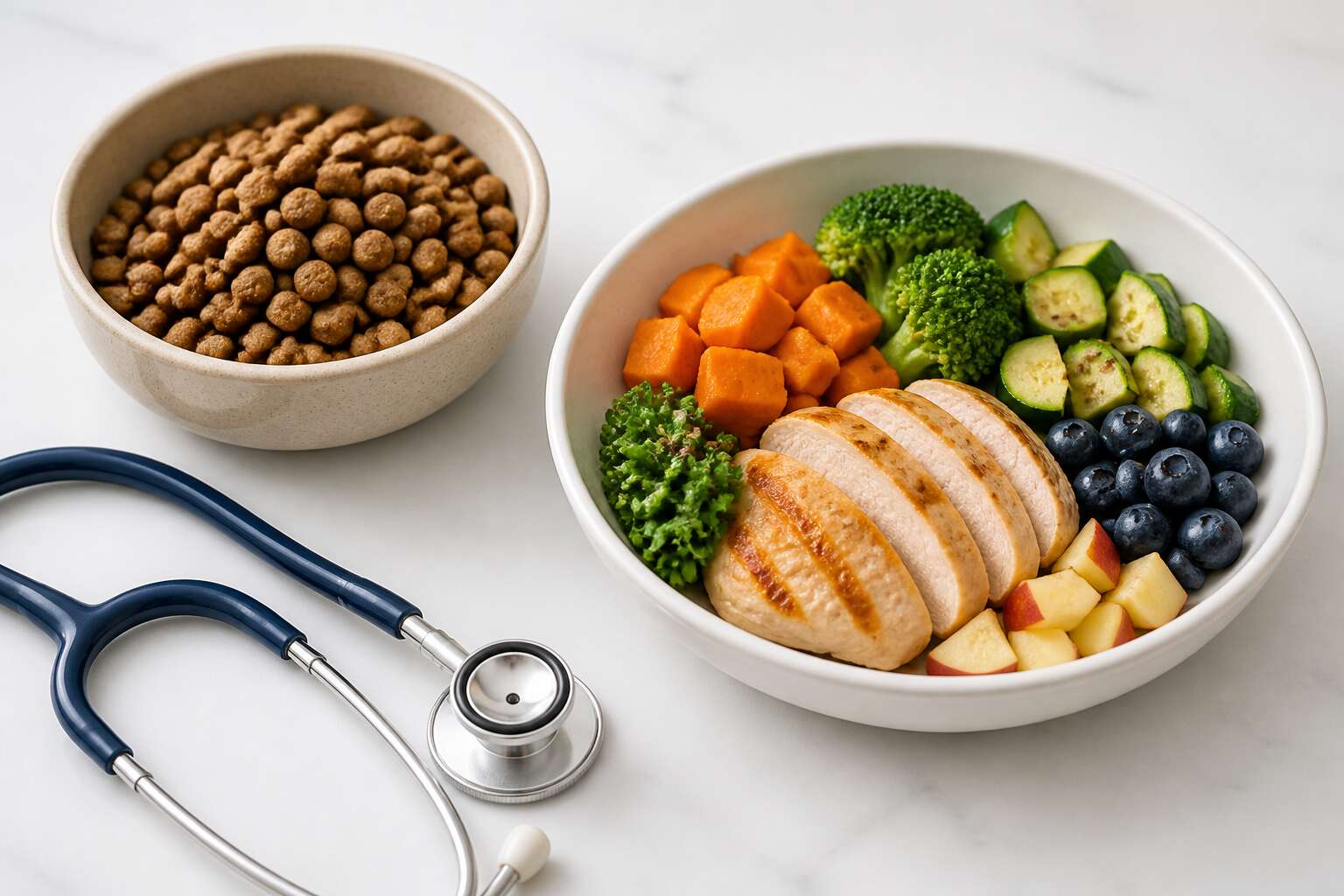
What Really Goes Into Commercial Dog Foods
The Evolution of Manufactured Dog Food
In 1964, a single extruder machine transformed canine nutrition across the globe. Commercial dog food before that era consisted mainly of baked biscuits and tinned meat. Extrusion, borrowed from cereal manufacturing, created puffed kibble that stayed shelf-stable for long periods. This innovation made feeding convenient and cheap, but it also created a gap between what labels promised and what recipes actually contained. That gap matters more than most owners realise!
That gap persists in South Africa today. When a bag boasts “real chicken” or “farm-raised beef,” the actual percentage of those ingredients may be modest relative to the carbohydrate base of maize, sorghum, or rice. Rendered meals and fats often fill the remainder. These components supply calories and structure without resembling whole foods. Pet owners who ask are dog foods good for dogs must first examine the ingredient order and sourcing transparency before trusting the marketing.
The evolution of manufactured dog food tracks the broader shift toward industrial convenience. Post-war prosperity encouraged processed diets for everyone, including pets. By the 1980s, premium brands differentiated themselves through the removal of artificial preservatives and the addition of specific nutrients. That split created a two-tier market where economy lines relied on unnamed animal derivatives and premium lines invested in traceable ingredients. Owners confronting these choices naturally wonder are dog foods good for dogs when price and quality diverge so sharply.
Consider what commonly appears on a typical commercial formula label, and the difficulty of answering are dog foods good for dogs becomes obvious:
- Meat and bone meal from rendered tissues and skeletons
- Maize gluten, a protein by-product of starch extraction
- Animal fat preserved with tocopherols
- Dicalcium phosphate for mineral fortification
- Digest, a flavour enhancer made through enzyme treatment
Each ingredient serves a functional purpose, from binding kibble to boosting palatability. Yet their presence demands scrutiny, especially for owners without access to detailed sourcing data. A label may list “beef” without clarifying whether that includes connective tissue or organs. Regulations require honesty in naming, but interpretation allows room for variance. The real question, are dog foods good for dogs, cannot be answered generically because each formula differs in quality and digestibility.
Quality statements help. A kibble with named proteins, balanced fatty acids, and minimal artificial additives can support canine health effectively. I have examined dozens of South African pet food labels, and the variance is striking. A budget product built largely on grain and unnamed animal derivatives may meet baseline nutritional profiles, yet it rarely achieves the same absorption or stool quality. The invention of extrusion delivered affordability and consistency. It also gave every pet owner reason to read labels with the same attention applied to human groceries. Are dog foods good for dogs? Ultimately, that rests on those choices.
Breaking Down Common Ingredient Lists
Commercial dog food contains ingredients most owners would never cook with. The first ingredient might be “maize meal,” a carbohydrate source that offers energy but little else. Next comes “poultry by-product meal,” a rendered mix of parts that never appear on a butcher’s counter. These ingredients keep costs low, but they complicate the answer to whether are dog foods good for dogs.
Here is what often hides inside a typical formula:
1. Maize or sorghum, the primary filler binding kibble together.
2. Meat and bone meal, which supplies protein but varies widely in quality.
3. Vegetable oil, added for fat content.
4. Salt and flavouring, masking the blandness of processed grains.
The percentage of actual deboned meat in most economy bags sits below 15%. The rest is structure and palatability agents. When owners ask are dog foods good for dogs, the honest response depends on reading that ingredient order carefully. A named protein at the top suggests better sourcing.
How Processing Methods Alter Nutritional Value
Heat alters protein structures before the bag ever reaches your pantry! Extrusion, the process that puffs kibble into shape, exposes ingredients to temperatures above 120 degrees Celsius. This kills bacteria, but it also denatures amino acids and degrades natural vitamins. The final product needs synthetic supplements to restore what the heat destroyed.
- High pressure gelatinises starches, making them easier to digest but spiking glycaemic response.
- Sprayed fats on the surface replace those lost during cooking, yet these are often low quality oils.
- Moisture removal extends shelf life at the cost of enzyme activity.
These alterations directly influence the answer to are dog foods good for dogs. A raw muscle might offer intact nutrients, while the processed version offers a shadow. Each batch varies based on cooking time, temperature, and equipment. Owners should consider that processing matters as much as the label, especially when asking are dog foods good for dogs.
The Role of Preservatives, Additives, and Artificial Flavors
A scoop of kibble carries a chemical list that outlasts its meat. Ethoxyquin, BHA, and BHT halt rancidity, yet each forces a dog’s liver to process a synthetic compound absent from nature. The trade-off: longer shelf life, higher metabolic toll.
Palatants, artificial flavors often derived from hydrolyzed liver digest, coat each pellet so the first bite mimics fresh organ meat. Consider the typical additive list:
- Propylene glycol to retain moisture without spoiling
- Smoke flavors to mask processing odors
- Colorants to mimic real meat
In my view, each additive answers a production problem, never a dietary need. When we ask if are dog foods good for dogs, the answer depends on how much chemical burden you accept in the bowl. The label lists nutrients, but preservatives reveal what the product had to survive. Are dog foods good for dogs? Only if the liver clears them faster than the factory adds them!
What AAFCO and FDA Standards Actually Guarantee
The label “complete and balanced” is a legal promise, not a quality badge. AAFCO sets minimum nutrient profiles for adult maintenance and growth, while the FDA polices safety and contamination. Neither agency inspects the biological value of ingredients or how processing affects digestibility.
Think about what these standards actually guarantee:
- Nutrient concentrations on paper, not in your dog’s bloodstream.
- Chemical safety limits, not long-term metabolic impact.
That leaves a gap between regulatory compliance and real nutrition. So when you ask are dog foods good for dogs, the honest answer begins with what the standards omit, not what they include.
Aligning Commercial Formulas with a Dog’s Biological Needs
Essential Nutrients Every Dog Requires
Most pet owners assume a full bowl equals complete nutrition. Yet a dog’s ancestral diet, rich in animal protein and organ tissue, demands far more than what many commercial recipes deliver. The question of whether are dog foods good for dogs hinges on aligning each formula with canine biology, rather than marketing labels alone.
Essential nutrients every dog requires include taurine, omega fatty acids, and bioavailable zinc. Without these, even a high protein kibble can leave gaps. I have seen dogs thrive only when their food matches their metabolic needs!
- Animal sourced protein
- Calcium and phosphorus in proper ratio
- Vitamin D for bone integrity
Commercial formulas often struggle to replicate this balance. The true test is whether the body can absorb what the label promises. The answer to are dog foods good for dogs depends on this alignment.
Comparing Dry, Wet, Raw, and Freeze-Dried Options
South African pet owners face a bewildering shelf of formats. Dry kibble dominates supermarket trolleys, yet wet, raw, and freeze-dried options place different demands on digestion. The question of are dog foods good for dogs hinges on how closely the format mirrors ancestral feeding patterns.
Wet food offers higher moisture, which aids hydration but often requires refrigeration once opened. Raw formulations mimic whole prey, yet demand rigorous handling. Freeze-dried options preserve nutrients without the bulk of frozen storage.
Every format carries trade-offs. A dog’s biology rewards variety, so rigid adherence to one commercial form may create gaps. Some raw diets lack vitamin D, while certain dry foods boost it synthetically. I have watched picky eaters thrive on wet formulas, while working dogs maintain condition on raw. The answer to are dog foods good for dogs lies in matching the format to your dog’s age, activity, and health profile.
Life-Stage Formulas: Puppy, Adult, and Senior Nutrition
Puppies require calcium-to-phosphorus ratios that differ from adult maintenance. Senior dogs lose lean muscle mass faster than their younger counterparts. A single bowl formula cannot address these divergent demands. I have seen owners in Johannesburg feed one kibble to every dog in the house, from a teething Border Collie to a grey-muzzled Boerboel. That approach ignores the metabolic shifts that occur with age.
Life-stage formulas exist because nutrient density must change. Puppy food carries higher protein and fat, adult formulas balance energy for activity, and senior diets add joint support compounds like glucosamine. The question of are dog foods good for dogs becomes a question of timing. Match the formula to the life stage.
- Puppy: higher protein, calcium for bone growth
- Adult: balanced protein, controlled fat
- Senior: lower phosphorus, added joint care
A dog’s biology does not remain static. Neither should its food. The answer to are dog foods good for dogs rests in this constant recalibration.
The Ongoing Protein-to-Carbohydrate Ratio Debate
Somewhere between the ancestral wolf and the couch-dwelling Labrador, carbohydrate requirements became a battlefield. The ongoing protein-to-carbohydrate ratio debate splits vets, marketers, and owners in Johannesburg. Are dog foods good for dogs when they tip toward starch? A dog’s digestive tract produces amylase, but the quantity is modest. Commercial formulas often lean on carbs as a cheap binding agent.
- High protein for muscle maintenance
- Moderate carbohydrates for sustained energy
- Low carbohydrates for senior or sedentary breeds
Every dog’s metabolic tolerance varies. A working farm dog handles a higher carbohydrate load than a lapdog. Aligning commercial formulas with biological needs requires reading the guaranteed analysis and watching your dog’s condition. The debate persists, and so does the question of are dog foods good for dogs for each individual animal.
Hidden Health Risks Lurking in Some Dog Food Recipes
Common Fillers That Add Little Nutritional Value
Beneath the glossy kibble and the reassuring promises printed on every bag, there are shadows. The question of are dog foods good for dogs often hides a darker truth.
Many recipes rely on inexpensive fillers to pad their weight. Corn gluten, wheat middlings, and soybean hulls appear in the ingredient list with alarming frequency. These fragments offer bulk, not nourishment. They pass through the digestive tract offering little more than calories that lack substance.
I have read countless labels and found the same unsettling pattern. The cheap filler displaces quality protein. The result is a meal that fills the bowl but leaves the body deprived. Some manufacturers even use artificial colourants to mask the dull grey of heavily processed grain. What a hollow trick that is for the animal left to eat it.
The Truth About Meat By-Products and Meal
The term “meat by-products” often appears on ingredient lists like a warning label. These ingredients are not automatically harmful. Organ meats and connective tissues can provide real nutrition for dogs. The true problem is the rendering process. High temperatures destroy enzymes and create a protein powder of dubious origin.
Some manufacturers use animals classified as “4D,” dead, dying, diseased, or downed. These animals become cheap meal. Another concern is the undefined “animal digest,” a broth of rendered tissues with chemical preservatives. Consider what appears in many bowls:
– Poultry by-product meal with no named animal source
– Meat and bone meal without species specification
– Animal fat preserved with synthetic antioxidants
The real question, are dog foods good for dogs, depends on these hidden details. A label can legally obscure the truth. The honest answer to are dog foods good for dogs is found in ingredient specificity, not the smiling dog on the packaging.
Food Allergies and Sensitivities Triggered by Ingredients
One in three dogs will develop a food allergy in their lifetime. The humble question, are dog foods good for dogs, becomes urgent when your dog starts licking paws raw or develops chronic ear trouble. Triggers often lurk inside recipes that claim to be gentle. Here are the common offenders:
- Chicken, beef, lamb, and other repeat proteins
- Corn, wheat, soy, and other grain fillers
- Dairy products and eggs in unexpected forms
The tricky part is cross-reactivity. A dog allergic to chicken may also react to duck or turkey. Many premium foods swap names but keep similar protein structures. This explains why changing from one brand to another never resolves the itching. So when you ask are dog foods good for dogs, remember that allergies are individual. A food that suits one dog can be a problem for another.
Obesity and Overfeeding: Portion Control Challenges
We measure portions by the scoop, not by the dog. I see this mistake in almost every home I visit. That single habit explains why half of South African pets carry excess weight. The label offers guidance, but it ignores treats, table scraps, and your dog’s refusal to exercise. The real question, are dog foods good for dogs, turns on our own discipline.
Calorie density varies wildly between recipes. Two cups of one kibble might exceed three cups of another by a third more energy. Watch for these warning signs in your own dog:
- Ribs are hard to feel beneath gentle pressure
- The waist has disappeared from above
- Your dog pants after a short walk
Portion control requires honesty. The recipe matters, but the serving size matters equally. Are dog foods good for dogs? That depends on how much you pour.
Toxic Substances Occasionally Found in Low-Quality Brands
Hidden risks lurk in some dog food recipes. Low-quality brands occasionally test positive for toxic substances that have no place in any bowl. Pentobarbital, a euthanasia drug, has appeared in certain canned foods. Melamine, once used to spike protein levels, caused fatal kidney failure in pets. Aflatoxins, produced by mold on improperly stored grains, can damage the liver.
These contaminants are rare, but they are real. When you ask are dog foods good for dogs, consider the source. The cheapest bags often come from suppliers with weaker quality controls. That is why I read the recall lists before I buy.
The Impact of Preservatives on Long-Term Canine Health
Hidden health risks lurk beyond the obvious toxins. Many recipes rely on synthetic preservatives to stretch shelf life. These compounds accumulate in tissue over years. The liver and kidneys process them daily, and the burden compounds with age.
Common culprits include:
- Ethoxyquin, a chemical tied to immune suppression
- BHA and BHT, synthetic antioxidants linked to endocrine disruption
- Propyl gallate, an additive with uncertain long-term effects
These substances prevent rancidity but carry long-term consequences. When South African pet owners ask are dog foods good for dogs, the answer depends on what hides inside the bag. The label lists preservatives briefly, yet the long-term cost is invisible. I have watched dogs age on the same brand, the additives stacking with every meal. The threat is cumulative. One bowl seems harmless. Thousands of bowls leave a mark. That is a trade I refuse to make!
Observable Signs That a Dog Food Is Benefiting Your Dog
Shiny Coat and Healthy Skin as Indicators
When a dog’s coat turns from dull ash to a living sheen, the answer to are dog foods good for dogs becomes visible in the flesh. The skin beneath, once flaking and rough, now rests supple and unbroken. These transformations are not cosmetic illusions; they are physiological verdicts on the food’s true worth.
Observe your companion during the grey hours. A beneficent diet reveals itself through specific markers:
- Resilient fur that resists tugging and sheds minimally
- Skin that shows no redness, dandruff, or oily patches
- A subtle, natural odour rising from the coat
Each of these signs confirms that the nutrients are reaching the deepest layers of the dermis.
Stable Energy Levels and Balanced Behavior
Stable energy levels are the clearest daily proof when asking are dog foods good for dogs. A dog that maintains steady enthusiasm from morning to night, with no frantic spikes or sudden collapses, is receiving usable fuel. You see it in their eagerness for a walk, their focused response to commands, and their ability to settle when the day winds down.
Balanced behavior mirrors that internal steadiness. Proper nutrition produces a dog who does not pace endlessly, gnaw obsessively, or snap after meals. Instead, they match the household rhythm. These observable signs matter!
- Calmness within an hour after eating
- Playful energy without hyperactivity
- No sudden aggression or anxiety episodes
When those patterns hold steady, the answer to are dog foods good for dogs appears in your companion’s daily temperament.
Firm Stools and Regular Digestive Patterns
Beyond temperament, firm stools reveal how well the digestive system absorbs nutrients. When a dog produces solid, well-formed waste once or twice daily, that regularity signals proper breakdown of food. Soft or unpredictable stools often mean the body struggles with something in the recipe.
Check for a rhythm that holds across days. A consistent morning bowel movement or a reliable post-meal routine shows respect for the digestive tract. You might also notice less flatulence and fewer accidents indoors!
- Stools that hold shape without crumbling
- No straining or excessive scooting
- Consistent timing from day to day
When you see these signs, the answer to are dog foods good for dogs becomes clearer.
Choosing the Right Food for Your Dog’s Unique Needs
Decoding Ingredient Labels Like a Professional
The question “are dog foods good for dogs” deserves more than a simple yes or no. The answer depends on what you find inside the bag, and how well it matches the animal standing in front of you.
Your dog’s needs shift with age, breed, activity level, and even the season. A working farm dog on the Highveld requires more protein than a lapdog in a Johannesburg flat. The ingredient list shows what really matters, but only if you read past the front of the package. I always start with the order of ingredients, since the first three listed items matter most. Then I look for specifics:
- Named protein sources like chicken or beef, not generic “meat”
- A clear fat source instead of vague “animal fat”
- Whole ingredients rather than heavily processed fragments
These details separate a thoughtful recipe from a cheap filler blend.
Evaluating Grain-Free vs. Whole-Grain Formulas
Every dog has specific nutritional requirements that shift with age, workload, and environment. A Border Collie herding sheep on a Free State farm needs a different energy profile than a Pekingese that naps on a Sandton sofa. Are dog foods good for dogs? Only when the protein, fat, and carbohydrate sources line up with that animal’s daily output.
Grain-free versus whole-grain formulas deserve the same measured approach. Replacing wheat with legumes or sweet potato does not automatically improve quality. Brown rice and oats deliver dependable energy for active dogs. In my experience, the deciding factor is how your individual dog metabolises the carbohydrate source.
A three-week observation period provides the answer. Monitor these markers!
- Weight stability without portion changes
- Firmness and frequency of stools
- Energy and demeanour after exercise
Those signals reveal whether the recipe matches the dog in front of you.
Budget-Friendly Dog Foods That Still Meet Nutritional Standards
Choosing the right food for your dog’s unique needs does not require a veterinary nutritionist. A bag of dog food costs more per kilogram than most staples in a South African pantry. So are dog foods good for dogs? Only when they match your dog’s age, activity, and metabolism, not a marketing budget.
I have watched working dogs thrive on modest brands, while pampered pets develop issues on premium lines. Start with your dog’s body condition and activity level! Budget-friendly dog foods that still meet nutritional standards are easier to find when you follow these habits:
- Buy larger bags, but only if your dog will eat them before the expiry date
- Compare the cost per meal, not the cost per bag
- Adjust portions based on your dog’s waistline
Breed-Specific and Size-Specific Considerations
Are dog foods good for dogs? The answer depends on breed and size, not marketing. A Great Dane needs larger kibble to slow eating and reduce bloat. A Chihuahua needs smaller bites and a denser calorie load. Jaw structure, digestion speed, and energy expenditure all shift the ideal recipe.
Size also drives metabolism. A working Boerboel burns energy quickly, while a Pekingese may store fat easily. A generic formula cannot serve both! Breed-specific lines exist, but matching the nutrient profile to your dog’s frame matters more.
- Chewing speed reveals whether kibble size is appropriate.
- Waistline changes indicate portion adjustments.
When owners ask are dog foods good for dogs, they should first ask whether the food fits their dog’s biology.
The Value of Consulting Your Veterinarian Before Switching
Beyond breed and size lie the unpredictable aspects of individual physiology. Your dog’s microbiome, enzyme production, and even its tolerance for specific carbohydrate sources remain unique to that animal. A formula designed for a muscular working breed may trigger subtle metabolic responses in a sedentary companion with a different genetic lineage.
This is precisely why the question are dog foods good for dogs becomes a medical consultation, not a marketing decision. A veterinarian performing a thorough physical exam can detect early signs of organ stress that an owner might miss. They can analyze fecal scores and serum chemistry to assess how a candidate recipe actually interacts with your pet’s system.
- Existing drug therapies
- Parasite load and gut health
- Age-related renal function
Alerting your vet before a switch allows a controlled transition, where weight shifts and coat changes become meaningful data points. It also gives a baseline for future changes. Without that professional evaluation, you are trusting the label blindly. The consultation cost is trivial against a lifetime of misdiagnosis.
Separating Dog Food Myths from Veterinary Science
The Raw Diet Myth: Is Uncooked Always Better?
Raw diets often carry a reputation for ancestral purity, yet veterinary science reveals a more nuanced truth. Uncooked meat can harbour pathogens such as Salmonella and Listeria, posing risks to dogs and the humans who handle their food. The idea that heating destroys vital enzymes overlooks the fact that dogs produce their own digestive enzymes. Are dog foods good for dogs? When properly formulated and cooked, they provide consistency and safety that raw preparations struggle to achieve. A 2021 study found that raw-fed dogs shed more antibiotic-resistant bacteria than kibble-fed peers. Consider the practical realities:
- Bacterial contamination is not rare.
- Nutritional imbalances occur without expert formulation.
- Whole bones can fracture teeth.
Veterinary nutritionists generally agree that cooked, balanced diets remain the safest option. The raw myth persists because it appeals to a yearning for simplicity, not because evidence supports it.
Revisiting the Corn, Wheat, and Soy Scare
When we demonize corn, wheat, and soy, we ignore the precision behind modern extrusion. These grains are not sinister fillers. They deliver digestible carbohydrates, essential fatty acids, and plant-based proteins. Veterinary science shows that true food allergies in dogs are rare, and grains account for a fraction of diagnosed cases. A 2018 survey from the Veterinary Nutrition Center noted that only 2% of allergic reactions trace back to wheat.
So are dog foods good for dogs when they contain these ingredients? Yes, if the formula is complete and balanced. The scare persists because anecdote outpaces evidence. Grains become harmless once cooked and ground. The actual culprits behind sensitive stomachs are often beef, chicken, or dairy. Let’s revise our suspicion: corn provides linoleic acid. Wheat offers an energy source. Soy supplies protein. All are safe for the vast majority.
Are Chicken and Beef Real Allergy Culprits?
Veterinary dermatologists attribute nearly 70% of confirmed food allergies in dogs to chicken or beef. That statistic should rearrange your thinking! So are dog foods good for dogs when they feature these proteins? For the majority, absolutely. For the sensitive minority, the answer is a vigorous no.
I have watched owners discard a grain-inclusive kibble, convinced wheat was the villain, only to ignore the chicken meal in the next formula. The science is precise: proteins, not carbohydrates, trigger the immune response. That itchy paw is more likely a protest against the beef in his bowl than the soybean oil.
- Chronic ear infections that recur with monotonous regularity.
- Facial pruritus, which is a fancy term for a very itchy face.
- Anal gland irritation that no amount of pumpkin resolves.
Those are the signs worth scrutinising. Ultimately, are dog foods good for dogs? Yes, when matched to the individual’s true allergy profile. The challenge is finding that culprit, and that requires the discipline of a proper elimination diet.
Homemade Meals: Are They Superior to Processed Foods?
Fresh ingredients feel virtuous. The question of whether homemade meals outperform processed foods demands veterinary science. A 2020 review found that most homemade recipes lack essential nutrients like zinc and copper. The average owner’s chicken and rice bowl seldom meets AAFCO standards. So are dog foods good for dogs? Only when the recipe matches verified requirements. Processed diets earn their reputation through controlled formulation, not machinery.
- Inadequate calcium without crushed bone.
- Missing iodine and vitamin E.
- Protein overload with minimal organ meat.
- Fat content that triggers pancreatitis.
Nutritionists agree homemade can excel. The myth equates kitchen freshness with safety, yet the true response to are dog foods good for dogs lies in nutrient delivery. That logic fails! Every ingredient needs precise measurement, every meal needs balance. Processed foods provide consistency. Homemade offers control but demands competence. The evidence does not crown either. It asks whether the dog receives complete nutrition.


0 Comments