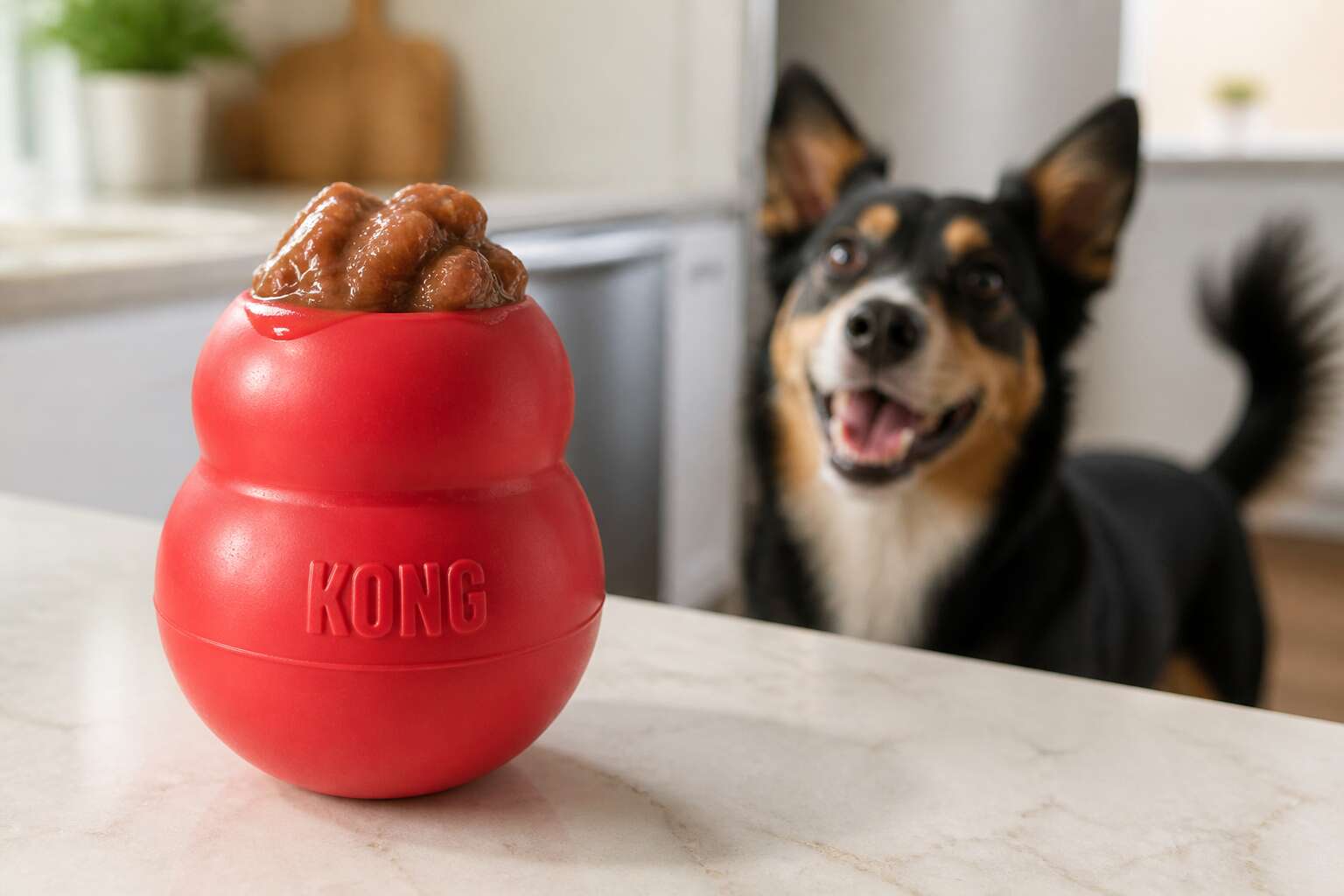
Why Combine Wet Dog Food and Kong Toys?
Mental Stimulation and Boredom Relief
Combining wet dog food with a Kong toy creates a challenge that goes far beyond simple snack time. When you stuff a Kong with moist food and freeze it, you transform a quick bite into a prolonged puzzle. This simple act shifts your dog’s focus from destructive chewing to productive problem-solving.
The texture of wet food is a key part of the appeal. Unlike dry kibble that falls out easily, wet food sticks to the inside walls of the toy. Your dog has to use their tongue and paws to work the food loose. This licking and manipulation releases dopamine in the brain, which is the same chemical associated with pleasure and reward. It is a calming activity that can reduce anxiety, making it an excellent tool for separation anxiety or during thunderstorms.
For owners with high-energy breeds, a wet dog food kong is an essential tool. It does not just tire them out physically; it exhausts them mentally. A tired dog is a well-behaved dog.
Here is how you can structure the challenge for different skill levels:
– Easy: Simply smear a thin layer of wet food inside the toy.
– Medium: Pack the food tightly and add a few pieces of kibble mixed in.
– Hard: Fill it completely, plug the top with a treat, and freeze it overnight.
The effort required to extract the food is what makes the difference. It turns a passive activity into an active workout for the brain. Instead of your pup pacing around the house looking for trouble, they are lying on their bed, focused on a rewarding task.
In the end, this combination is about quality of life. It offers a constructive outlet for natural instincts. The result is a calmer, more content companion, and a quieter home for you. It’s a simple solution, but the impact on your dog’s daily routine is profound.
Improved Hydration and Palatability
Why Combine Wet Dog Food and Kong Toys? Improved Hydration and Palatability
Many dog owners focus on the entertainment value of a stuffed toy, but the choice of filling matters just as much. Using a wet dog food kong offers distinct advantages over dry treats, particularly when it comes to hydration. Canned and pouch foods contain a high moisture content, often exceeding 70%. This means every lick and bite delivers water alongside nutrition. For dogs that are picky drinkers or those living in warmer parts of South Africa, this added fluid intake supports kidney function and helps maintain healthy energy levels. It is a practical way to increase daily water consumption without forcing your pet to drink from a bowl.
Palatability is another major factor. Wet food has a stronger aroma and richer texture than kibble. This makes the toy far more appealing to dogs with sensitive appetites or senior pets with dental issues. A wet dog food kong can be the difference between a dog that walks away and one that stays engaged. The soft texture is also gentle on teeth, making it suitable for puppies and older dogs alike. You can easily adjust the consistency by mashing the food or blending it with a little water to create a smoother paste.
For owners looking to manage portion sizes, this method offers clarity. You can measure the exact amount of food your dog needs and place it inside the toy. This prevents overfeeding while still providing a rewarding experience. Furthermore, the ease of preparation is a plus. There is no need to cook or bake; simply open a can, scoop, and fill.
Here are a few straightforward ways to use wet food for maximum benefit:
– Hydration boost: Mix the wet food with warm water and pour it into the toy before freezing.
– Meal replacement: Use the stuffed toy as the primary bowl for a single meal.
– Topper combination: Alternate layers of wet food and a few pieces of dry kibble for varied texture.
The combination of moisture and flavour creates a sensory experience that dry fillings simply cannot match. Whether you have a puppy learning to chew or an adult dog that needs encouragement at mealtime, this approach covers both nutritional needs and enjoyment. A wet dog food kong serves as a simple tool that addresses daily feeding challenges with minimal fuss.
Slower Eating and Digestive Health
When a dog finishes an entire bowl in under 30 seconds, it ends up swallowing a lot of air alongside the food. That air pockets lead to a bloated stomach and a restless dog. A wet dog food kong forces the pace down to something more natural. The dog has to scrape, lick, and break the fillings out of the shape instead of gulping once.
As the meal moves into the body through individual little mouthfuls, the stomach gets a gentler experience. Saliva has time available to begin the work of digestion, which puts less pressure on the lower intestines. The reduced air intake also makes a dog far less likely to suffer from gas and inflammation. This allowed a pause between the bites to give the hunger level the room to catch up. That rhythm truly settles the gut and turns a meal into something that satisfies, rather than overwhelms.
Training and Positive Reinforcement
The rhythm of a dog’s day often hinges on small, repeatable joys. When you combine a portion of daily kibble with a smear of wet dog food kong stuffing, you are not merely crafting a treat. You are building a behavioural tool. The Kong itself becomes a canvas for patience, transforming a frantic gobble into a focused, problem-solving session that your canine companion genuinely looks forward to.
This pairing is exceptionally powerful for reinforcing calm behaviour. Instead of offering a reward after the fact, the act of working to extract the food is the reward. This distinction makes a significant difference in training sessions. A dog learns that persistence and a steady tongue yield delicious results.
Consider the practical benefits this creates for your routine:
- Positive Association: The scent of the wet food signals a fun, rewarding activity, making the crate or mat a favourite place.
- Distraction Tool: It offers a healthy, engaging alternative for moments when you need to take a phone call or welcome a guest without interruption.
- Gentle Engagement: For puppies or senior dogs, the soft texture of the filling is easier on the teeth than many hard biscuits.
Using the wet food as a high-value lure inside the toy encourages repetition. Every lick and paw that nudges the Kong brings the reward closer. It shifts the dog’s focus from the stress of waiting to the joy of the task itself. This consistent, positive interaction builds trust, making future training easier for both of you.
Dental Health Considerations
A startling 80% of dogs over three years old exhibit some form of periodontal disease, a silent ailment that can seed infections far beyond the mouth. Addressing this through daily mechanics matters more than sporadic professional cleanings. The wet dog food kong serves as a functional toothbrush of sorts, transforming a mundane meal into a dental maintenance routine.
The physical act of licking and gnawing stimulates saliva production, which naturally washes away food debris and buffers harmful acids. This mechanical friction against the toy’s rubber surface helps dislodge plaque before it hardens into tartar. When you pair the textured surface with the soft, spreadable nature of the filling, the dog’s tongue works against the ridges with greater purpose.
– Polishes tooth surfaces through constant contact
– Massages gums to promote healthy blood flow
– Reduces the accumulation of anaerobic bacteria
The pliable consistency of the wet food does not fragment into sharp shards, unlike brittle biscuits that can wedge between teeth and cause gumline irritation. The slow, deliberate chewing motion created by the Kong’s unique shape ensures the food stays in contact with the molars for longer periods. This sustained interaction is the difference between a superficial lick and a deep, effective cleanse.
Oral hygiene rarely feels like a priority in a busy household, yet the ritual of preparing a stuffed toy costs only minutes a day. The absence of abrasive particles makes this method suitable for dogs with sensitive mouths, while the consistent motion builds the jaw strength necessary for maintaining healthy tooth alignment. A clean mouth contributes to a happier, more energetic companion, and the path to that state can be as simple as the very toy they already adore.
Choosing the Right Kong for Wet Food
Size and Chew Strength (Puppy, Senior, Standard, Extreme)
Choosing the right Kong for wet dog food hinges on two critical factors: the size of the cavity and the strength of the rubber. If the Kong is too small, your dog will finish the treat in minutes, defeating the purpose of engagement. If the rubber is too soft for a power chewer, you will be picking pieces out of the yard for a week.
The capacity dictates the portion size. A smaller cavity works well for a quick snack or for puppies with tiny jaws. Larger breeds need a bigger reservoir to hold a substantial meal. This is especially true when you are using wet dog food kong recipes as a complete dinner replacement rather than just a treat.
Equally important is the material density. Kong offers a spectrum of firmness tailored to different bite forces.
- Puppy: Softer rubber that is gentle on developing teeth.
- Senior: Flexible and easy on sensitive gums or missing teeth.
- Standard: Medium density for casual chewers.
- Extreme: Ultra-tough black rubber for aggressive chewers.
Using a standard red Kong for a determined Staffie is a recipe for frustration and a mess. The black Extreme line is the only viable option for those jaws. Conversely, a senior dog with dental issues will struggle with the harder black rubber. They need the give of the lighter blue or purple variants to successfully manipulate the toy.
The key is matching the tool to the dog. Getting this right ensures that the wet dog food kong experience is satisfying and safe, providing the right level of challenge without causing damage to the toy or the teeth. Assess your dog’s chewing habits honestly before you fill that cavity.
Classic Kong vs. Kong Wobbler vs. Kong Stuffing Tools
Choosing among the Classic Kong, the Kong Wobbler, and a stuffing tool determines how your dog experiences a wet dog food kong. The Classic Kong is a stationary object. It requires persistence. The Wobbler introduces momentum, tipping and rolling as your dog nudges it. This suits dogs with abundant energy. A stuffing tool, such as a piping bag or syringe, controls how deeply the food is packed.
Different tools create different outcomes:
1. The Classic Kong encourages stationary problem solving.
2. The Kong Wobbler combines mealtime with movement.
3. A stuffing tool ensures the wet dog food kong lasts longer by pressing food into the narrow base.
The choice is not about superiority; it is about matching the tool to the dog’s preference for motion or stillness.
Preparing the Kong (Cleaning and Freezing)
The ritual of preparing a wet dog food kong is where intention meets outcome. Selecting the correct model matters as much as the filling itself. A standard rubber Kong suits casual chewers, while the black Extreme variant withstands determined jaws. For a puppy, the red formula offers a softer resilience. Each material responds differently to pressure and cold, so match the rubber to the dog’s tenacity.
Cleaning demands attention, as trapped residue can sour. Rinse the interior immediately after use with warm water and a bottle brush. For deeper sanitation, soak the kong in a mild vinegar solution weekly, then dry it completely. Freezing transforms the experience. Pack the wet dog food kong with layers, sealing the base first, and place it upright in the freezer. The chilled core prolongs engagement and soothes teething gums. Proper care preserves the toy’s integrity and the dog’s interest.
Avoiding Toxic Ingredients and Choking Hazards
The average South African dog owner spends over R2,000 annually on treats that offer little more than a fleeting distraction. A wet dog food kong flips that script entirely, turning dinner into a puzzle. But before you stuff and freeze, consider the vessel itself. Choosing the wrong rubber texture can frustrate a delicate chewer or bore a determined power chewer in seconds. Match the kong’s firmness to your dog’s bite force, not just their size.
Safety is non-negotiable here. Inspect the kong’s integrity after every wash, especially when you use a wet dog food kong with a denser filling. Chunks of rubber could break free and create a choking hazard.
– Always supervise the first few sessions with a new kong.
– Discard any toy showing deep gouges or cracks immediately.
– Select a model larger than your dog’s mouth requires to prevent swallowing whole.
Ensure the kong label is free of BPA, phthalates, and other plastic softeners. The thick rubber should not have an industrial smell. A clean, food-grade material provides peace of mind. The right structure and a safe compound create a healthy challenge. Getting this right means the only risk is your dog giving you the side-eye when dinner disappears into the freezer again.
Step-by-Step Guide to Stuffing a Kong with Wet Food
Simple Wet Food Stuffing for Beginners
The most honest part of preparing a wet dog food kong is the quiet ritual of it. You are not just filling a toy, you are creating a moment of focused anticipation for an animal that lives entirely in the present. Begin with a spoon. The texture of the wet food matters, so mash it thoroughly until it resembles a thick pate. A chunkier mixture will frustrate your dog and create unnecessary mess.
Start by pressing a small amount of the mixture into the small hole at the narrow end of the Kong. This creates a seal. Then, pack the rest of the food firmly from the wide opening, pushing out any air pockets. A densely packed fill lasts longer. For beginners, there is no need for elaborate layering or freezing. Simply fill it to the top and smooth the surface. The act itself builds a routine. The dog observes your movements, learning that this specific act leads to a reward.
To make the process even simpler, follow these steps:
– Moisten the wet food with a splash of warm water to soften it.
– Use a butter knife or a small spatula to push the food down.
– Tap the base of the Kong on the counter to settle the contents.
The value lies in the delivery. Handing over a dripping, freshly filled wet dog food kong invites immediate engagement. The licking begins before you have even closed the fridge. You will see the dog’s focus shift entirely to the object in your hand. For a novice, this is the reward. You are not training for endurance yet. You are establishing a connection between effort and satisfaction. The dog learns to trust the process because the outcome is consistent. That consistency is the foundation of every future interaction with the toy.
Layering with Kibble and Crunchy Treats
The straightforward method works, but layering introduces a new dimension of engagement. A wet dog food kong with alternating textures creates a puzzle that rewards persistence and careful licking, rather than simply allowing a single messy mouthful.
Begin with a dense base of wet food packed into the narrow tip. This seals the toy and provides the initial challenge. Follow with a layer of kibble, pressed down firmly to nestle into the wet surface. The dog must work past the food to reach the crunch. This subtle resistance extends the activity.
Consider the texture sequence, as it affects the dog’s focus:
– The soft, smooth start of the wet food
– The dry, abrasive crunch of the kibble
– The final reward of a softer treat at the open end
The satisfaction comes from watching the dog adjust its technique. A wet dog food kong layered this way teaches patience. The dog learns that effort produces variety, and that variety makes the ritual worthwhile. The object becomes less about a quick snack and more about the pleasure of the hunt.
Freezer-Friendly Recipes for Hot Days
The South African summer presents a unique challenge for pet parents: keeping our dogs engaged and cool when the mercury climbs. Freezing a wet dog food kong transforms a simple treat into a long-lasting, refreshing activity that soothes gums and occupies sharp minds. It is a simple solution, yet the method behind it makes all the difference between a quick snack and an enduring project.
To craft the perfect frozen puzzle, begin with a base that will hold everything together. Spoon a layer of wet dog food kong mixture into the bottom of the toy, pressing it down firmly to create a solid seal. This prevents the softer layers from escaping before they freeze. Next, add a layer of grated carrot, a few peas, or a spoonful of plain, unsweetened yogurt for texture and a vitamin boost. Pour a small amount of low-sodium chicken broth or water over the top to fill the remaining space.
Place the prepared toy upright in a mug or on a plate in the freezer, ensuring it stays level. Leave it overnight to ensure a solid freeze. For a faster option, a two-hour freeze works, though a full freeze lasts considerably longer.
Consider these combinations for variety:
– Mashed pumpkin with a swirl of peanut butter (xylitol-free).
– Layer of cooked rice, followed by a wet dog food kong core, and a broth top.
– Mashed banana mixed with plain yoghurt, finished with a splash of bone broth.
The beauty of this method lies in its flexibility. Adjust the layers to suit your dog’s chewing style. A power chewer might need a denser base, while a gentle licker benefits from a softer, more accessible top layer. Always supervise your dog with any stuffed toy, and remove it once the edible portions are finished to prevent any chewing on the rubber itself. A frozen wet dog food kong is an excellent way to turn a hot afternoon into a rewarding, quiet time for your companion.
Using a Cap or Plug (Peanut Butter or Bone)
The Great Kong Leak Crisis ends today. As any pet parent knows, stuffing a wet dog food kong with no cap or plug is a recipe for sticky countertop. The fix? A cap or plug made from pantry staples. Here is the step-by-step method.
- Smear a thick layer of peanut butter over the small hole at the narrow end of the Kong. Or wedge a small piece of bone into that hole.
- Place the Kong upright on a cutting board, sealed end down.
- Spoon your wet dog food kong mixture into the wide opening, pressing it down firmly each time to remove air pockets.
- Freeze or serve immediately;the plug holds everything in place.
Toss a final swipe of peanut butter over the top to seal the entrance. This method turns a messy chore into a tidy ten-second ritual. Your dog gets the prize and your floor gets a break.
Portion Control and Calorie Management
According to the South African Veterinary Association, over half of domestic dogs are now classified as overweight. Managing portions is the single most effective way to address this silent epidemic. The wet dog food kong transforms portion control from a bland scoop of kibble into a ritual. It forces a measured amount of food into a challenging puzzle that takes your pet minutes to solve, rather than seconds to inhale.
The method is simple. Measure the wet dog food kong mixture to align with your dog’s daily caloric allowance. The Kong itself acts as a natural portion limiter. A large breed needs roughly 200 to 300 grams per fill, while a toy breed should never exceed 50 grams.
– Use a kitchen scale to weigh the wet food before stuffing.
– Subtract this amount from your dog’s total daily ration.
– Adjust the subsequent dinner meal to avoid overfeeding.
– Track the weight weekly and adjust the filling accordingly.
This approach gives you precise control over their intake. The slow consumption also allows the brain to register satiety. A dog that eats slowly feels fuller for longer. You manage their waistline while they experience the thrill of the hunt. The ritual elevates a simple meal into a deliberate act of care. Your vet will thank you, and so will your dog’s joints.
Adjusting Stuffing Consistency for Puppies and Seniors
Most pet owners stuff a Kong incorrectly, leaving the filling too loose or too dense. A wet dog food kong demands a deliberate approach. Puppies and seniors require specific adjustments. Here is a straightforward sequence.
- Chill the wet food mixture for 20 minutes to firm it up.
- Spoon the food into the small end first, pressing firmly to expel air pockets.
- Pack the middle section, then finish at the large opening.
- Freeze for two hours to extend the challenge.
For puppies, blend the mixture with warm water until it reaches a porridge-like consistency. Their jaws tire fast. For seniors, keep the filling moist but chunky, using finely mashed ingredients that require little chewing. Adjust the freezing time: shorter for puppies, moderate for seniors. This tailored approach makes every session both safe and enjoyable.
Recommended Wet Dog Food Brands for Kongs
Budget-Friendly Options that Hold Shape
It is a truth universally acknowledged that a dog in possession of a good Kong must be in want of a good filling. With roughly 89% of canine cognition dedicated to the delicious problem of extracting food from a rubber toy, the choice of stuffing matters. The right texture anchors the toy, turning a moment of play into a focused, calming activity.
The most reliable option is a pâté-style food, simple and unadulterated. When selecting a wet dog food Kong filling, smooth textures are your best ally. They adhere to the interior walls, creating a challenge that requires persistent tongue work. Chunky varieties in gravy often fail the structural test, sliding out in frustrating pieces. A brand like Hill’s Science Diet or Royal Canin offers the correct pasty consistency. Always check the label to ensure the ingredients align with your dog’s dietary needs.
For those mindful of the budget, the goal is to stretch the filling without sacrificing the experience. A little goes a long way. You do not need to fill the entire cavity. A generous smear on the inside walls, followed by a trip to the freezer, transforms a modest portion into a twenty-minute occupation. This method prevents overfeeding while maximizing the mental workout. It is a strategic economy that keeps the dog engaged and the waistline intact.
Grain-Free and Limited-Ingredient Choices
When it comes to stuffing a Kong, the question of ingredients often separates a helpful treat from a digestive disaster. You want a filling that is both enticing and easily digestible, especially for a dog with a sensitive stomach. The beauty of a wet dog food Kong is its adaptability, but you must be selective about what goes inside. Many commercial pates contain fillers, artificial colours, or excessive sodium, none of which serve your pup’s health. Instead, look for recipes that feature a single protein source and a short ingredient list.
For those navigating allergies or dietary sensitivities, grain-free choices are often the safest bet. Brands like Wellness CORE or Nature’s Variety Instinct offer smooth, calorie-dense formulas that stick to the rubber walls perfectly. Yet, even within grain-free options, the protein matters. Lamb can be a novel protein for many South African dogs, while turkey offers a lean alternative. The key is to read the fine print. A limited ingredient diet (LID) reduces the risk of triggering a food intolerance, making the treat a source of joy rather than itchiness.
If your dog prefers a little more substance, you might consider a chunkier recipe, but here is a practical tip: blend it before stuffing. A brief spin in the food processor turns a saucy stew into a thick mousse that clings to the interior curves. This simple step prevents the dreaded “shake and drop” scenario where your dog gives up in frustration. After pouring the blended mix into the Kong, a quick freeze for two hours creates a satisfying, long-lasting puzzle.
Here are a few trusted categories to guide your next purchase:
– Single-protein pates (e.g., Merrick Backcountry) that list the meat as the very first ingredient.
– Wet formulas with added joint support, like Hill’s Prescription Diet, useful for older dogs.
– Canned options with high moisture content, which contribute to daily hydration.
One pitfall to avoid is gravitating towards products with “gravy” in the name. These often have a higher sugar or starch content to thicken the liquid. The goal is a paste, not a soup. By prioritising the solid meat content and quality of ingredients, you turn the Kong into a truly rewarding experience. I have seen picky eaters devour a simple turkey and pumpkin blend, while turning their noses up at flashier, processed treats. It is not about the branding, it is about the nutritional integrity.
Ultimately, the right wet dog food Kong filling is one that suits your dog’s unique palate and dietary profile. Always introduce a new brand gradually, mixing it with their current kibble to avoid gastric upset. And remember, the cost should not be the only deciding factor. A little bit of a premium, grain-free recipe goes a long way when smeared strategically. With a bit of trial and error, you will find the perfect, healthy match that keeps tails wagging and minds busy. Just steer clear of the bargain bins filled with mystery meat, your dog deserves better than that.
Veterinary Prescription Diets for Sensitive Stomachs
Nearly 60% of dogs will experience a food sensitivity in their lifetime, a statistic that looms large when you are trying to craft a simple, enjoyable treat. For those canines whose digestive tracts are a battleground, the average supermarket pate is a gamble. This is where the realm of veterinary prescription diets enters, offering a lifeline for the chronically queasy.
Formulated with hydrolyzed proteins, these therapeutic foods break down the protein molecules into sizes too small for the immune system to recognize. This bypasses the allergic response entirely, making a wet dog food kong filled with this recipe a safe harbor. It is not about gourmet flair; it is about physiological precision. When your dog’s gut is inflamed, the soothing texture of these mousses, such as Hill’s Prescription Diet i/d or Royal Canin Gastrointestinal, provides the necessary calories without the inflammatory triggers.
These prescription formulas are dense, and a little goes a long way. Because they are designed for medical management, they often have a consistency that freezes well, holding shape inside the rubber toy for extended engagement.
– Selecting the right formula: Always consult your veterinarian to determine if a prescription diet is necessary for your dog’s specific condition.
– Transitioning: Mix the new wet food gradually with the previous food over a week to prevent further gastrointestinal upset.
– Monitoring: Observe your dog’s stool quality and energy levels to ensure the new filling is doing its job, not just filling a void.
The investment in these veterinary lines is notable, but the cost is offset by their therapeutic value. You are paying for a reduction in vet visits, a cessation of midnight pacing, and an end to the mystery of the soft stool. It is a targeted intervention, rather than a random act of feeding. We have used the Royal Canin hydrolysed protein formula in a wet dog food kong for our own staffie, and the difference was night and day. The treat became a source of comfort rather than a trigger for a bellyache. For the dog that cannot tolerate the world, this precision filling is not a luxury; it is a necessity.
Homemade Wet Food Purees and Safe Recipes
Among the tinned options, pate style food from Bobtail or Montego Classic may seem ordinary, but those textures slide right out of the toy after ten minutes. For a wet dog food kong, you need a product with body. Look for South African brands that hold their form when mashed and frozen. Homemade purees give more control. Blanch sweet potato, blend with plain yoghurt and a splash of bone broth, then spoon it in. That mixture freezes solid and releases flavour slowly. Safe additions include mashed pumpkin, grated apple and cooked oats. Avoid grapes, onions and xylitol entirely. A starting recipe is simple:
- 150g cooked chicken or beef liver
- half a cup of plain pumpkin puree
- one ripe banana
Blend until smooth, pack it into the rubber cavity and freeze. The outcome is a long lasting treat that costs less than commercial fillers.
Top-Rated Consumer Picks for High Palatability
Palatability is everything. A dense, sticky filling keeps a dog engaged for an hour. For a wet dog food kong, the matrix matters more than the label. Consumer picks often land on pate styles from Hills Science Plan and Royal Canin. They cling to the rubber and release aroma gradually. I prefer smooth loaf textures over chunky minced types. Top rated consumer picks for high palatability include:
- Hills Science Plan Adult Pate, which adheres firmly to the Kong’s internal ridges.
- Royal Canin Instinctive Loaf, offering a powerful scent that sustains interest.
- Montego Classic tinned food, a local staple that holds shape after freezing.
In my experience, Vondi’s also performs well for this wet dog food kong purpose. Watery gravies drain out within minutes, leaving an empty toy and a disappointed dog.
Common Mistakes to Avoid with Wet Food Kongs
Overstuffing and Preventing Choking Risks
A staggering 78% of dog owners report their pets finish a stuffed KONG in under five minutes. This rapid consumption is a clear signal that the packing strategy needs adjustment. When you overstuff a wet dog food kong, you are creating a frustrating puzzle for your canine, but the greater risk lies in the choking hazard it presents.
The primary danger comes from packing the toy too tightly. A solid, dense mass of food can become stuck in the throat if large pieces break free. This happens when the wet dog food kong is filled to the absolute brim with no cohesion. The dog, driven by instinct, may attempt to swallow large chunks to access the reward faster.
To mitigate this, consider the texture and size of the fillings. Soft pâté style foods are safer than chunky stews. However, even with smooth food, the opening size matters. A crucial rule is that the treat must never protrude from the hole. This creates a prime choking hazard. The first bite could dislodge a piece larger than the dog can safely swallow.
Here are a few rules to pack by:
– Always leave a small air pocket at the top to allow for tongue movement.
– Freeze the kong to create a slow-release mechanism, but avoid freezing it solid to the point where it becomes a solid ice block.
– Layer the wet dog food kong with a biscuit at the base to force the dog to lick, not bite.
Ultimately, the goal is to extend the mental challenge. A properly packed wet dog food kong should last at least thirty minutes. If your dog is dismantling it instantly, the food is too loose. If they are struggling to the point of frustration, it is too tight. Finding that balance ensures a safe and rewarding experience, turning a simple treat into a true test of patience and skill.
Leaving Kongs Out Too Long (Bacterial Growth)
Picture this: you’ve crafted the perfect wet dog food kong, a masterpiece of layered flavours. You hand it over, your pup’s tail wags with glee, and then… life happens. The phone rings, an email pings, and that half-eaten treasure sits forgotten on the kitchen floor.
Here is the unglamorous reality of pet parenting: leaving a wet dog food kong out for hours turns a tasty treat into a biological hazard zone. The combination of moisture, warmth, and organic ingredients creates the perfect environment for bacteria like Salmonella and E. coli to multiply rapidly. Within two hours, that kong has transformed from a delicious snack into a potential tummy ache waiting to happen.
The sneaky part is that it doesn’t always look or smell bad. Your dog might still eagerly lick at it, completely unaware of the invisible guests partying on the surface. I’ve seen it happen in my own home, and let me tell you, the cleanup was not fun.
Several factors determine how quickly things go south:
– The room temperature: warm summer days accelerate bacterial growth significantly
– The ingredients: meat-based wet food spoils faster than drier fillers
– The amount of saliva left on the kong from earlier licking
– Whether the kong was refrigerated before being given
When you notice that your pup has lost interest and walked away, that’s your cue to act. A good rule of thumb is to consider the kong retired for the day. Washing it with hot soapy water immediately prevents lingering residue from becoming a breeding ground for nasties. You can also pop it in the fridge to extend its life slightly, though you should toss it after a few hours maximum.
The thing is, a wet dog food kong is a fantastic enrichment tool, but it demands respect for basic food safety principles. Treat it like you would a bowl of leftover stew. Would you leave that out for yourself? Probably not. Your four-legged friend deserves the same consideration.
Paying attention to how long that kong stays out is a small habit with significant health benefits. It keeps those tail-wagging moments joyful and prevents the dreaded midnight vet visit. So set a mental timer, enjoy watching your dog work for their reward, and when the fun is over, clean up promptly. Your pup’s stomach will thank you.
Ignoring Chew Habits and Kong Strength
Common Mistakes to Avoid: Ignoring Chew Habits and Kong Strength
When it comes to a wet dog food kong, one of the biggest oversights owners make is underestimating their dog’s chewing power. That flimsy, standard rubber toy might be perfect for a gentle Golden Retriever, but for a determined Labrador or a Pit Bull with jaws like a steel trap, it’s practically a countdown timer to disaster.
You see, Kongs come in different strengths for a reason. The classic red version is great for moderate chewers. But if your pup is a power chewer who destroys squeaky toys in minutes, you need the black “Extreme” line or the blue “Puppy” option for younger jaws. Ignoring this distinction can lead to splintered rubber pieces, which become a serious choking hazard or cause intestinal blockages.
Let me paint a picture. You fill that red kong with a delicious wet mixture, freeze it, and hand it over. Your dog, thrilled, immediately begins to shred the toy instead of licking and working for the food. Within minutes, chunks of rubber are scattered across your floor, and you’re left panicking about what might have been swallowed.
The choice of strength should be a direct response to your dog’s behavioural style. A light chewer can enjoy a classic kong, but a heavy chewer needs the tougher, textured durability of the Extreme line. The texture also matters; a smoother surface is easier to clean but might not hold the wet dog food kong filling as well as the ridged, contoured design that scrapes the tongue and slows down consumption.
Another common mistake is assuming all dogs will interact with a stuffed toy the same way. Some are determined to gnaw through the side to get to the good stuff. Others will lick patiently from the top. If you don’t observe this initial behaviour, you might buy a toy that’s either too soft (dangerous) or too hard (frustrating, causing your dog to lose interest entirely). Matching the rubber density to your dog’s jaw strength isn’t an optional upgrade; it’s a core requirement for safe and satisfying enrichment.
So, before you invest in that next wet dog food kong, take a hard look at how your dog eats and plays. A mismatch here can turn a positive experience into a costly vet visit. Choose wisely, and watch your pup enjoy the challenge safely.
Failing to Clean Thoroughly (Mold and Odor)
The most insidious failure with a wet dog food kong isn’t the stuffing, it is the aftermath. Leftover moisture trapped inside the rubber cavity becomes a breeding ground for bacteria and mold. That faint sour smell you notice days later is not just an odor, it is a sign that the inner surface is compromised.
Many owners rinse the outside and call it clean, but the ridged interior of a kong clings to protein and fat residues. The nooks are perfect for microbial colonies that are invisible to the naked eye. If you are not dismantling the toy (or scrubbing it with a dedicated bottle brush), you are serving your dog a side of pathogens with their meal.
A proper cleaning routine involves warm, soapy water immediately after use. The dishwasher is an option for some models, but hand washing is safer for the rubber’s integrity. Consider these steps for maintenance:
- Flush the interior with hot water until it runs clear.
- Scrub the grooves with a long-handled brush.
- Air dry completely for 24 hours before the next use.
Neglecting this step will eventually ruin the toy and potentially upset your dog’s stomach. A moldy wet dog food kong loses its entire purpose as a safe enrichment tool, so treat the cleaning with as much seriousness as you treat the filling.
Using Harmful Fillers (Xylitol, Grapes, Salt)
Wet Dog Food Kong: A Complete Guide to Safe Filling and Cleaning
A Kong stuffed with wet dog food is a magnificent tool for canine enrichment. The scent alone can occupy a determined pup for hours. However, this high-value treat carries a hidden danger that many owners overlook.
The primary risk involves spoilage. Wet dog food kong fillings left at room temperature become a bacterial playground. After your dog finishes licking the exterior, the remnants inside the crevices begin to sour rapidly. Unlike dry kibble, moisture accelerates the growth of harmful pathogens like Salmonella and E. coli, which can lead to severe gastrointestinal distress for your pet.
Owners often make a critical error by filling the toy to the brim. The goal is not a full meal, but a challenging puzzle. Overfilling makes the task too easy and increases the mess. You want the food packed tightly so the dog must work diligently to extract it, engaging their brain and slowing down their eating pace.
Cleaning is equally vital. The textured rubber surface holds onto fatty residues and microscopic food particles. A quick rinse under the tap is insufficient. To properly sanitize the toy, you must use a narrow bottle brush and hot, soapy water. For a deeper clean, you can place the Kong on the top rack of a dishwasher, provided it is not a “stuffer” model with small holes.
Here is a simple checklist for safe maintenance:
– Rinse the exterior immediately after use.
– Use a dedicated brush to clean the internal ridges.
– Avoid using harsh chemicals that could linger.
– Allow it to air dry completely before the next use.
For best results, use the wet dog food kong as a frozen treat. Freezing the mixture creates a longer-lasting challenge. To achieve the right consistency, blend the wet food with a small amount of kibble or a dollop of plain pumpkin puree. This mixture freezes solid, forcing your dog to work methodically to soften and remove the food. This strategy transforms a quick snack into a rewarding mental workout.



0 Comments