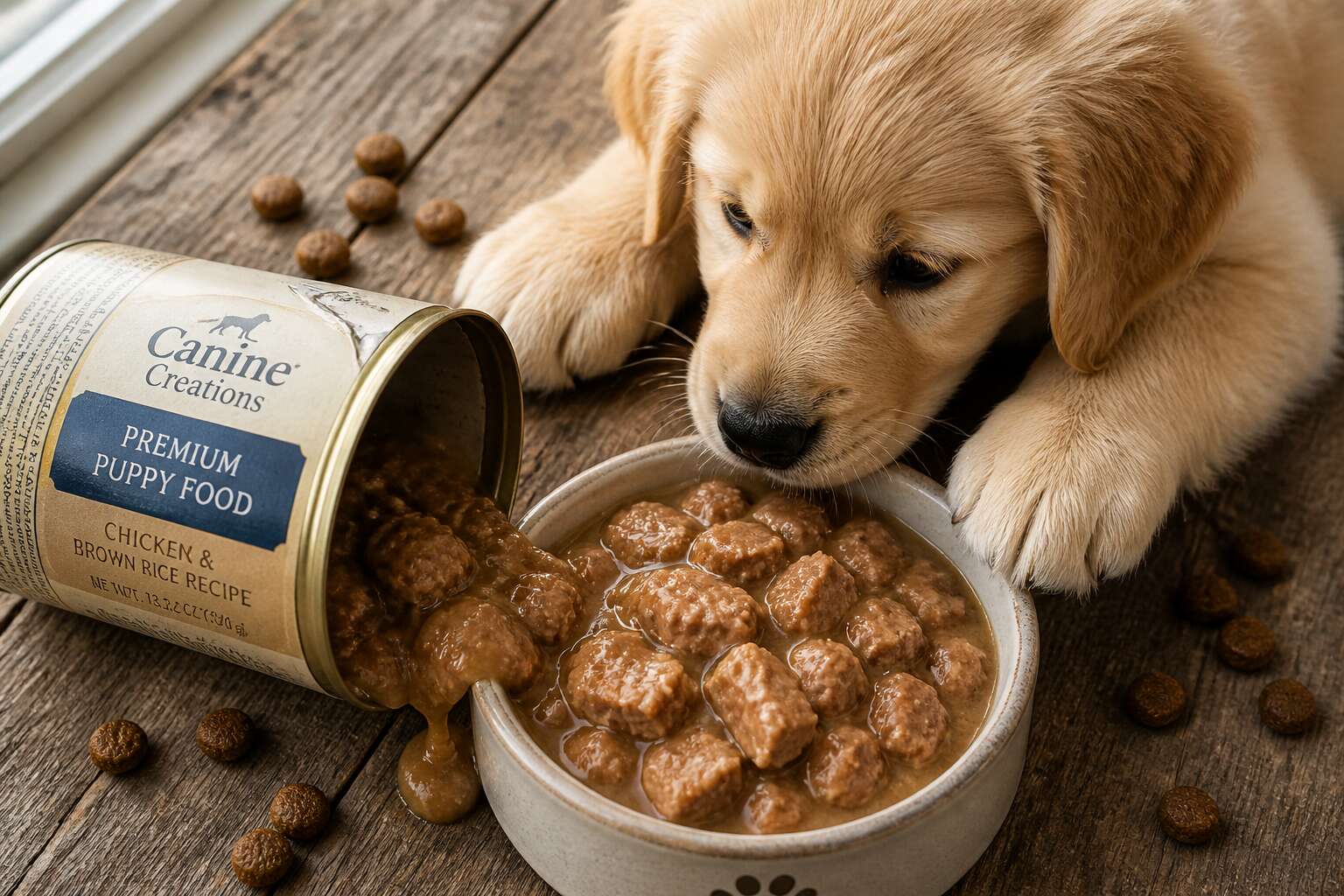
Why Canned Food Benefits Growing Puppies
The first weeks of a puppy’s life are a relentless construction project. Every cell is dividing, every bone is calcifying, and this explosive growth demands a precise, dense payload of nutrients. Dry kibble, with its bulky carbohydrates, can fill a tiny stomach without delivering the necessary protein and fat. This is where the unique utility of puppy can dog food becomes apparent. Its high moisture content aids in hydration, which is often a silent struggle for young animals who forget to drink enough.
Texture matters more than we admit. A young dog’s jaw is a delicate machine, still developing its bite force. The soft, palatable consistency of canned food encourages proper eating habits without the risk of choking on hard pieces. Consider the specific advantages:
1. Higher moisture supports renal health and digestion.
2. Enhanced aroma stimulates a finicky appetite.
3. Dense caloric content supports high energy turnover.
The psychological comfort of a warm, soft meal cannot be overstated. It mimics the maternal regurgitation process, easing the transition away from mother’s milk. I have found that the sensory experience of puppy can dog food, its rich scent and meaty texture, builds a positive association with mealtime, which is crucial for behavioural development. This is not about coddling; it is about providing a foundation that is biologically appropriate for a creature in overdrive.
Key Nutrients to Look for in Wet Puppy Formulas
There is a moment in every new puppy owner’s life when you stand in the aisle, staring at the sheer volume of options, and you wonder if you are making the right choice. It is a simple act, picking a tin, but it feels monumental. The truth is, the right nutrition in those early months builds the foundation for a lifetime of health, and wet food often gets overlooked. While kibble has its place, the moisture content in a quality puppy can dog food supports hydration and is gentle on a young, developing digestive system.
So, what are you actually looking for when you peel back that lid? You are looking for a balance of cellular building blocks and energy sources that mimic the richness of a mother’s milk, but in a more solid form.
– High-quality animal protein, like chicken or lamb, listed as the first ingredient for muscle development.
– DHA, an omega fatty acid that is fundamental for brain and eye development, think of it as the spark for their learning potential.
– Taurine, an amino acid that supports a growing heart and healthy vision.
– Calcium and phosphorus in a precise ratio, to forge strong, growing bones.
Take a moment to flip the tin over and scan the list. You are not just feeding a hungry belly. You are investing in the way they chase a ball, how quickly they learn to sit, and the shine in their coat. In South Africa, with our warm climate, the extra moisture in this food is a quiet hero. It helps keep your little friend comfortable, active, and less prone to urinary issues later in life.
Look for recipes that list a specific meat, not just “meat by-products”. The difference is staggering. A named protein source tells you exactly what you are providing. When you find a formula that combines these elements thoughtfully, you can rest a little easier. You are giving them something that tastes incredible, sure, but you are also providing the precise fuel their little bodies are crying out for during this rapid growth phase. Your local vet or a trusted pet store can point you to brands that adhere to these standards if you feel lost in the sea of choices. After all, that little wagging tail deserves nothing less.
How to Choose the Best Canned Food for Your Puppy
Your puppy will not eat what you expect. That is the first lesson! Puppy can dog food offers a convenient way to manage portions and moisture intake, but not every can suits every breed.
I have learned that nutritional profiles vary wildly between brands. Puppies need more protein and fat than adult dogs. They also need calcium for growing bones. A good puppy can dog food should list meat as the first ingredient. Look for local certification. South African brands often follow their own guidelines.
- Texture matters for teething puppies.
- Pate styles are easier to eat.
- Chunky styles encourage chewing.
Observe how your puppy responds to the food. Some pups gulp, others nibble. The right choice supports steady growth without digestive upset.
Feeding Guidelines for Canned Puppy Food
Your puppy’s stomach is roughly the size of its head, which explains the theatrical sigh after every meal. Feeding guidelines for canned puppy food are less about exact numbers and more about reading the animal before you. Most brands suggest 40 grams per kilogram of body weight, split into three meals, but adjust as you watch their energy and waistline.
Temperature matters. Cold food from the fridge offends a delicate nose, so let it rest for ten minutes. When selecting puppy can dog food, check for an AAFCO statement. Then, follow these steps:
- Weigh your puppy weekly.
- Divide the daily portion into three meals.
- Keep water beside the bowl, not in it.
Overfeeding is a social blunder. A plump puppy looks sweet, but those extra kilos strain growing joints. Patience and observation beat any measuring cup.
Frequently Asked Questions About Wet Puppy Diets
There is a particular kind of social drama that unfolds at suppertime when your puppy turns their nose up at kibble. It is a silent protest, a test of your resolve. Many owners find that a tin of puppy can dog food acts as the ultimate diplomat in these negotiations. The texture and aroma are simply more alluring to a developing palate. You might even find the ritual of opening the tin becomes the highlight of your dog’s day, a moment of pure, unadulterated anticipation.
However, the question of how much to serve is a common quandary. The answer isn’t always printed on the label with perfect clarity, is it? To help you navigate this culinary landscape, consider the following factors that dictate your pup’s daily allowance:
1. The specific caloric density of the variant you have purchased.
2. Your puppy’s current weight and expected adult size, which is a considerable variable.
3. Your chosen feeding frequency, as smaller meals are often gentler on young stomachs.
Beyond the basic quantity, there is the matter of texture. A common query revolves around whether the gelatinous aspect of the food is an additive or a natural byproduct. It is simply the broth, naturally occurring during the cooking process. And if you are concerned about dental health, rest assured that the mechanical action of chewing dry biscuits is not the only method of keeping teeth clean. A diet consisting primarily of moist, high-quality ingredients supports overall wellness. You can certainly mix it with dry food, but remember that the moisture content changes the dietary balance. So when you reach for that familiar puppy can dog food, you are providing a meal that is both palatable and nutritionally sound.



0 Comments