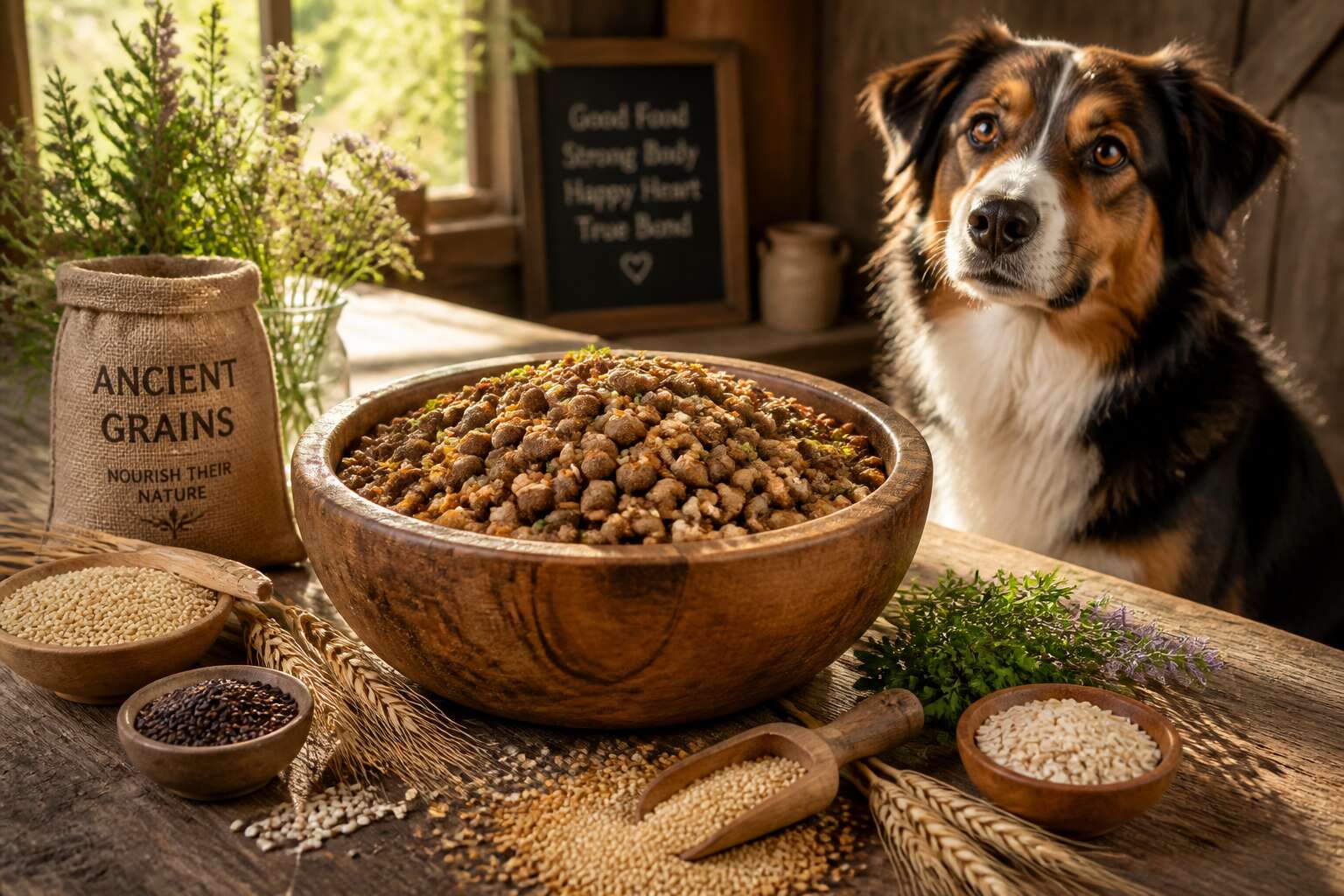
Tracing Ancestral Canine Diets
The Origins of Heirloom Breeds and Their Natural Menus
Archaeologists estimate that the earliest domesticated canines scavenged alongside humans for at least 14,000 years, yet the modern pet food aisle suggests dogs survived on extruded kibble all along. Heirloom breeds like the Africanis and the Rhodesian Ridgeback developed their digestive fortitude on a menu of raw meat, marrow, and the occasional stolen maize cob.
Ancestral canine diets were not complicated affairs. A typical prehistoric feast included:
- Scraps from human hunts, heavy on organ meat and bone fragments
- Foraged berries and roots, usually consumed by accident
- Opportunistic small prey, complete with fur and feathers
Heritage dog food follows these ancestral patterns. Modern producers source quality offal and bone broth to approximate what these hardy landrace breeds consumed long before commercial kibble existed.
Why Modern Processing Changed What We Feed Our Pets
In 1946, the pet food industry had a surplus problem. Wartime grain production left warehouses overflowing, and extruded kibble became the convenient answer. The process was never designed for canine digestion. It was designed to dispose of leftovers efficiently.
That origin story matters for anyone exploring heritage dog food. Heat processing destroys enzymes, denatures proteins, and drains moisture in ways ancestral meals never endured. Kibble relies on starch to hold its shape, and that starch now fattens pets across South Africa. The modern bowl is a monument to manufacturing convenience, not nutritional wisdom.
- Extrusion temperatures exceed 120 degrees Celsius
- Moisture drops from 70% to below 10%
- Live enzymes rarely survive the process
Heritage dog food takes a gentler approach. Cold pressing and slow air drying preserve what fire and pressure erase.
Defining the True Meaning of Traditional Pet Nutrition
Wild canids consume their prey whole: muscle, organ, bone, and the partially digested plant matter resting in the stomach. That combination shaped canine digestion over millennia. Traditional pet nutrition respects this blueprint. It asks what the animal’s body expects, not what the factory can produce efficiently.
Heritage dog food in South Africa follows this older logic. Ingredients stay close to their original form, minimally altered by heat or pressure. The nutrients remain recognisable to the canine gut.
An ancestral diet generally includes:
– Raw or gently cooked muscle meat
– Organ meats rich in vitamins
– Ground bone for calcium and phosphorus
– Fermented vegetables for gut flora
This is not nostalgia. It is a return to biological alignment.
Nutritional Superiority of Time-Honored Formulas
Bioavailable Proteins Sourced from Grass-Fed and Pasture-Raised Animals
Protein quality is measured by bioavailability, the proportion your dog’s body actually utilises. Modern production techniques compromise this through excessive heat. Time-honored formulas within heritage dog food retain the structural integrity of amino acids. Grass-fed and pasture-raised protein sources deliver a more complete nutritional matrix.
Consider the difference between pasture-raised beef and intensively farmed alternatives. The former yields higher conjugated linoleic acid and omega-3 fatty acids. The latter often contains elevated saturated fat and stress hormones. My own transition to these ingredients produced visible changes in my dogs’ vitality.
- Naturally occurring taurine supports cardiac function
- Cleaner protein profiles reduce digestive strain
- Trace minerals remain intact through gentle processing
Heritage dog food addresses a fundamental biological requirement that modern kibble frequently overlooks. The gap between industrial pet food and traditional formulations is physiological.
The Role of Natural Fats and Omega Fatty Acids in Longevity
The nutritional superiority of time-honored formulas extends to how fats are preserved and delivered. Industrial processing often strips essential fatty acids or renders them rancid. Heritage dog food relies on natural fats that remain structurally sound. Omega-3 and omega-6 fatty acids in proper ratios support cellular membrane integrity, which influences every system from skin to cognition. My own observations of dogs on these diets show a marked difference in coat condition and joint mobility. The role of these fats in longevity is not speculative. Consider the specific benefits:
- DHA supports neurological function and memory in aging dogs
- EPA lowers inflammatory responses that accelerate tissue damage
- Conjugated linoleic acid from grass-fed sources aids metabolic efficiency
Natural fats also facilitate the absorption of fat-soluble vitamins A, D, E, and K. Without adequate omega intake, even high quality proteins cannot be fully utilized. Heritage dog food formulations respect this interdependency. They avoid the high heat that destroys delicate lipid structures. The result is a diet that sustains vitality far beyond the average lifespan. That is the quiet power of tradition!
Digestive Microbiome Support Through Whole-Food Ingredients
Whole-food ingredients do more than supply nutrients. They feed the microbial ecosystem living in your dog’s gut. That ecosystem determines how well food is absorbed, which is why modern kibble often leaves dogs with dull coats and irregular stools. Traditional recipes include fermented vegetables, bone broth, and fibrous roots that act as prebiotics.
- Fermented ingredients introduce beneficial bacteria directly
- Whole grains maintain steady pH levels in the digestive tract
- Slow-cooked meats preserve enzymes that aid breakdown
The result is a digestive environment that resists inflammation and supports immune function. I have seen rescue dogs transition from chronic digestive distress to stable health within weeks of switching to heritage dog food. That is the practical power of honoring ancestral feeding methods.
Impact on Joint Mobility, Skin, and Coat Vitality
Nearly 20% of dogs over one year old show early signs of joint stiffness. Those numbers climb steadily with age. Time-honored formulas in heritage dog food depend on cartilage-friendly nutrients from slow-cooked connective tissue, not synthetic supplements that lose potency. My own Boerboel regained her bounce after switching!
- Natural collagen supports synovial fluid production
- Vitamin E from whole grains protects skin cell membranes
- Balanced omega intake reduces inflammation around joints
The skin mirrors internal nutrition. Coat vitality relies on amino acids and fatty acids kept in their natural ratios. Heritage dog food provides these elements intact, without the fragmentation caused by high heat. Dogs develop fewer hot spots and shed less. This is the real payoff of respecting older feeding methods.
Selecting the Right Heritage-Style Diet for Your Companion
Interpreting Ingredient Lists: Recognizing Authentic Ancestral Components
The most honest marketing claim sits on the back of the bag, not the front. Selecting a heritage dog food for your companion begins with a close reading of the ingredient panel. The first five listed components carry the most weight, as they form the bulk of every meal. I have found that authentic ancestral diets share a consistent pattern, one that becomes easier to recognise with practice.
- Named protein sources such as lamb, beef, or venison appear before any grains.
- Organ meats like liver and kidney hold visible positions on the list.
- Vague terms such as “meat meal” without a species trigger caution.
An honest heritage dog food lists whole foods you can identify without a degree in nutrition. If the label reads like a simple kitchen inventory, you have found a genuine match. Your companion’s daily energy will confirm what the list promises.
Comparing Grain-Free vs. Whole-Grain Traditional Recipes
Drawn between grain-free and whole-grain recipes for heritage dog food? I have watched owners hesitate, but the answer sits in your dog’s lineage. Grain-free versions lean on tubers such as sweet potato, a boon for sensitive stomachs. Whole-grain traditional recipes incorporate sorghum or barley, which feed beneficial gut bacteria through slow fermentation. What a difference the right fiber source makes!
The choice often hinges on three variables:
- daily energy expenditure
- known food sensitivities
- fecal quality during a two week trial
Neither route replaces the need for named proteins and organ meats. A thoughtful ancestral diet respects individual tolerance while maintaining heirloom integrity.
Certifications and Sourcing Ethics: What to Look For
Certifications are evidence. They show who audited the farm, the slaughterhouse, and the processing plant. Without them, sourcing claims remain unverified. When you buy heritage dog food, demand that paper trail!
I want to see traceability. Grass-fed claims mean little without verification. Ethical sourcing means the animal lived a decent life. It means the farmer received fair payment. Your companion deserves that transparency. Heritage dog food requires this scrutiny.
Consider these markers:
- Third party audits for animal welfare
- Named suppliers on the packaging
- Clear slaughter and processing standards
- No hidden fillers or unnamed by-products
A pack without these details falls short. South African pet owners are becoming sharper. They read labels with the same care they read their own food packaging. That shift forces better production.
Balancing Cost Against Premium Nutritional Value
A premium diet asks more of your wallet today, yet it often demands less from your veterinary bill tomorrow. Choosing heritage dog food requires matching the recipe to your companion’s age, breed, and activity level. A working farm dog’s needs differ from a city pet’s, and ancestral genetics shape protein and fat requirements. Watch energy, stool quality, and coat condition over six weeks. Observation reveals whether the diet truly fits!
Premium heritage dog food costs more due to pasture-raised sourcing and smaller batches. Better nutrition lowers recurring expenses for skin treatments and digestive medications. When comparing brands, weigh these factors:
- Cost per feeding, not cost per bag
- Calorie density relative to your dog’s size
- Manufacturer transparency about processing
A dense, nutrient-rich formula may cost more per kilogram yet require smaller portions. South African pet owners who prioritise quality over volume discover lasting value in heritage dog food.
Transitioning Gradually from Commercial Kibble to Heritage Recipes
Nearly 60% of South African dogs suffer digestive distress from abrupt diet changes. Selecting the right heritage-style diet takes patience. A staggered seven to ten day switch gives the gut microbiome time to adjust.
Begin by blending 25% heritage dog food with 75% of the current kibble. Every second day, increase the new ratio. Monitor these signals:
- Stool firmness and frequency
- Interest at the bowl
- Energy without restlessness
Commercial kibble and heritage dog food differ fundamentally in moisture content, protein complexity, and fibre structure. Digestive enzymes respond only to ingredients they have encountered before. A sudden swap overwhelms the entire system.
Some dogs need three full weeks before accepting an unfamiliar texture. Mixing both foods thoroughly prevents selective eating. Rushing the process invites setbacks. A measured transition respects the animal’s ancestral digestive design.
Debunking Myths Surrounding Old-World Pet Feeding
Raw vs. Cooked: Debating the Authentic Preparation Method
Some insist that authentic heritage dog food must be served raw, as if our ancestors owned refrigerators and a full butcher’s licence. That’s romantic nonsense. Archaeological evidence shows ancient dogs thrived on cooked scraps from human fires, not glistening fillets.
Cooked meals, gently simmered, mirror that historical reality far better than a steak tartare fad. The real issue is ingredient provenance, not serving temperature. A heritage recipe using pasture-raised liver works whether lightly seared or raw, provided the nutritional balance holds firm.
- Raw diets demand strict hygiene and carry pathogen risks.
- Cooked diets enhance digestibility while preserving vital nutrients.
So stop fixating on preparation theatrics. Your chosen heritage dog food should match your dog’s digestive capacity, not a YouTube influencer’s aesthetic.
Are Traditional Diets Always Exorbitantly Priced?
Many assume old-world pet feeding drains your wallet. That assumption deserves scrutiny. Heritage dog food often carries a premium label, but the reality is more nuanced. Bulk purchasing from local farmers or cooperatives trims expenses. Seasonal vegetables and organ meats, once considered waste, become affordable staples. The true expense lies in marketing fluff, not ingredients.
Cost comparisons ignore nutritional density. A bowl of traditional fare might cost more upfront yet require smaller portions. Fewer vet bills offset the difference. Heritage dog food need not be a luxury.
Still, pricing varies.
- Pasture-raised liver often costs less than processed fillers.
- Whole grains and legumes bought in bulk are cheap.
- Rotating proteins prevents waste and lowers long-term costs.
Smart sourcing transforms an old-world menu into a shrewd investment for South African pet owners.
Addressing Nutritional Completeness and Potential Deficiencies
The loudest criticism of old-world feeding claims that ancestral menus cannot possibly deliver complete nutrition. Yet this belief ignores how traditional cultures preserved both balance and variety. Heritage dog food, assembled with intention, provides the full spectrum of essential nutrients through whole ingredients rather than laboratory additions.
Consider what a genuinely complete bowl contains.
- Muscle meat for protein and B vitamins
- Organ meats for vitamin A, iron, and copper
- Edible bones for calcium and phosphorus
- Fermented vegetables for probiotics and enzymes
Deficiencies arise when owners feed only one component, such as pure chicken breast, and call it traditional. The old-world model never worked that way. South African pet owners who rotate proteins and include offal often discover their dogs thrive without synthetic fortification. Nutritional completeness is a function of variety, not of processing technology. Heritage dog food, when it honors that principle, becomes a complete meal rather than a gamble.
Separating Allergy Triggers from Beneficial Ancestral Proteins
Allergy diagnoses in South African dogs have climbed steadily over the past two decades, yet the proteins our ancestors fed rarely caused the reactions we see today. The culprit is often not the meat itself but the way it is denatured, repeatedly administered, or paired with inflammatory starches.
Heritage dog food relies on rotational proteins that mirror what wild canids actually consumed. A dog allergic to chicken from a kibble bag may tolerate the same species when sourced fresh, because the allergy often stems from processing byproducts rather than the muscle tissue itself. This distinction matters for anyone considering heritage dog food as a therapeutic option.
In my practice, the usual triggers look like this:
- Single-protein monotony, which sensitises the immune system
- Overcooked or extruded meats with altered protein structures
- Hidden fillers that carry trace amounts of multiple proteins
Separating true allergies from sensitivities requires examining the entire diet, not merely the protein source.
Integrating Ancestral Feeding Principles Into Daily Care
Implementing Meal Rotation for Species-Appropriate Variety
What a difference a week of varied meals makes to a dog’s vitality! Ancestral feeding principles rest on one truth: nature never served the same dish twice. Integrating this into daily care means practicing meal rotation, giving your companion a rotating selection of bioavailable proteins and seasonal vegetables.
I find that a base of heritage dog food, paired with occasional raw eggs or sardines, mirrors that ancient diversity. It keeps the digestive system adaptable and mealtime genuinely exciting. No precise formulas, just a respectful acknowledgment of how heirloom breeds once ate.
Supplementing Wisely: Adding Organ Meats and Bone Broth
The Zulu proverb “umuntu ngumuntu ngabantu” reminds us that identity is formed through community. For a dog, the same holds true at the cellular level. A heritage dog food base supplies the foundational nutrients, yet liver, kidney, or heart bring ancestral wisdom to the bowl. These organ meats carry dense concentrations of vitamin A, iron, and coenzyme Q10 that muscle meat cannot provide.
Bone broth, simmered slowly from pasture-raised bones, contributes collagen and glycosaminoglycans for joint resilience and gut lining integrity. I pour a warm splash over the daily ration on cool Johannesburg mornings. The aroma alone signals something ancient.
- Liver for retinol and copper
- Kidney for B vitamins
- Spleen for iron and protein
Owners often ask about quantities. A palm-sized portion of organ meat twice weekly suffices. Bone broth can replace water for one meal daily. The heritage dog food base adjusts naturally, since these additions satiate more completely.
Hydration Strategies and the Role of Moisture-Rich Foods
Water transports nutrients into every cell of a dog’s body. In the Karoo, where heat shimmers off red earth, hydration becomes a daily concern. Ancestral feeding principles recognise that moisture arrives through food itself. A heritage dog food ration, soaked in warm water or paired with raw marrow bones, delivers hydration alongside nutrition.
- Buttermilk from smallholdings
- Fresh pumpkin puree
- Watermelon rind scraps
- Sheep’s milk yogurt
Each offers electrolytes and water in forms dogs metabolise efficiently. The heritage dog food approach becomes more complete with these small ceremonies. On Highveld afternoons, I add a spoonful of fermented goat’s milk to the evening meal. The dogs drink less yet seem more settled. Their coats hold a deeper sheen, and their urine runs clearer. The difference appears within days, and I marvel at it each time!
This honours older feeding wisdom while addressing modern dehydration risks.
Combining Homemade Preparations with Commercial Heritage Blends
The morning ritual begins before the sun crests the koppies. I combine a measured scoop of commercial heritage dog food with a fistful of chopped lamb tripe, a dollop of fermented buttermilk, and the broth saved from yesterday’s potjie. Homemade preparations are not replacements; they are companions to the carefully formulated blend, each compensating for what the other lacks.
On days when the wind carries red dust across the Karoo flats, I add:
- A raw egg, shell crushed and all
- Cooked pumpkin with the seeds intact
- A sliver of beef liver, flash seared
These small offerings transform a simple ration into something older, a daily ceremony that gives heritage dog food its true meaning. The dogs consume it with a reverence that commercial feeding rarely earns. This integration honours the animal’s ancestry while answering the demands of modern living.



0 Comments